Omega Speedmaster Effect: Three Collectors, Three Distinct Personalities



Novelties
The Piaget Polo’s New (Two-Tone) Golden Age
Announced today, the iconic watch, so closely associated with 1980s-era stylish, jet-set largesse, takes a telling, revived bi-metal gold approach that speaks to its own beginnings while still pushing it forward into today.

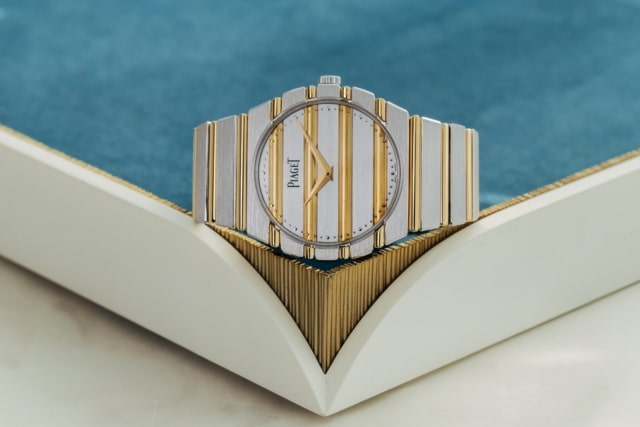
Before the days of “official” brand ambassadors and timepiece spokespeople, the Piaget Polo was favored by many, many of the global elite: Famously, artists Andy Warhol and Salvador Dali were fans. Ladies’ versions were worn by Elizabeth Taylor and Jackie Kennedy. Actress and “Bond girl” Ursula Andress served as a kind of early prototypical ambassador for the Polo. In fact, James Bond portrayer Sir Roger Moore was also spotted wearing the watch in its heyday.
When it debuted in 1979, the Polo’s effortlessly elegant appeal, integrated bracelet, and thin-for-its-time presentation helped define a new era for the modern luxury timepiece. However, over the decades, that message hasn’t diminished much, up to and beyond when affable actor Ryan Reynolds championed the more accessible steel Polos in 2016.
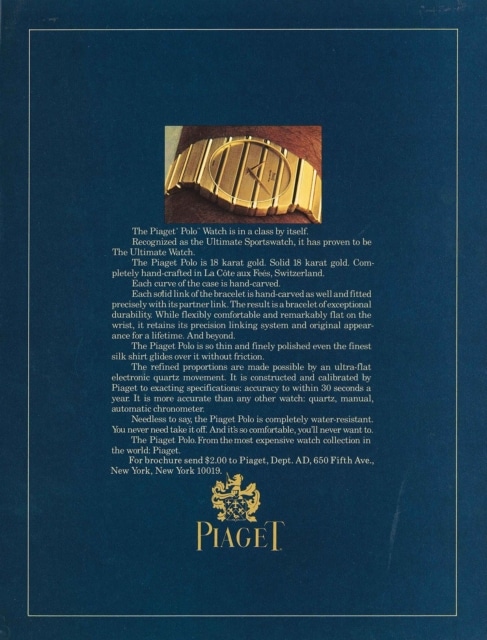
While we have seen multiple materials and interpretations brought to the Polo in recent years (most recently a complicated flying tourbillon/moonphase execution), elegant thinness and the use of gold have always been core to the Polo’s heritage, backing up creator Yves Piaget’s comment that it represents both “a bracelet watch and a watch bracelet.”
Doubling Up
Admittedly, a two-tone white- and yellow-gold approach was a part of the Polo story from the very beginning, but those early bi-metal timepieces are rarely seen today. In the new Piaget Polo 79 Two-Tone debuting today, the maison has fulfilled the design and promise of the noble-metal Polo 79 sub-collection’s debut designs in yellow gold from 2024 and white gold model from last year, simply (or perhaps not so simply) by elegantly combining the two materials.
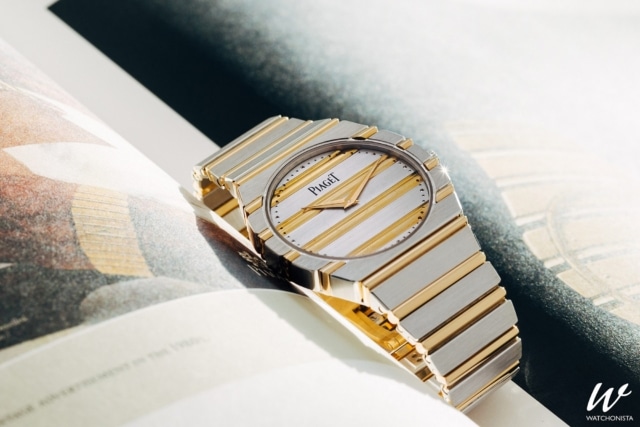
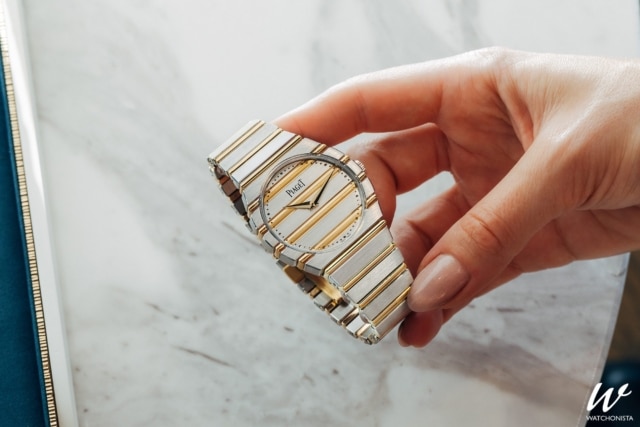
Shimmering brushed white gold constitutes the majority of the new watch’s construction, with horizontal “gadroon” stripes of polished yellow gold (and yellow gold hands and clasp components) providing eye-catching detail as the train of both materials rides up the bracelet and onto the 38mm case and dial.
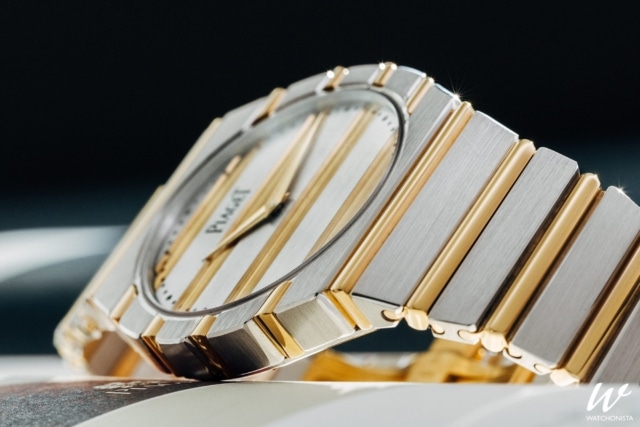
This contrasting design not only stays true to the Polo 79’s propensity to present as jewelry as much as a timepiece, but it also actually enhances that intent (begging the question: how long will we wait for a Polo with the reverse formula, and potentially very different material interplay, of mostly yellow gold with white gold details?).
Scenes Inside the Gold Mine
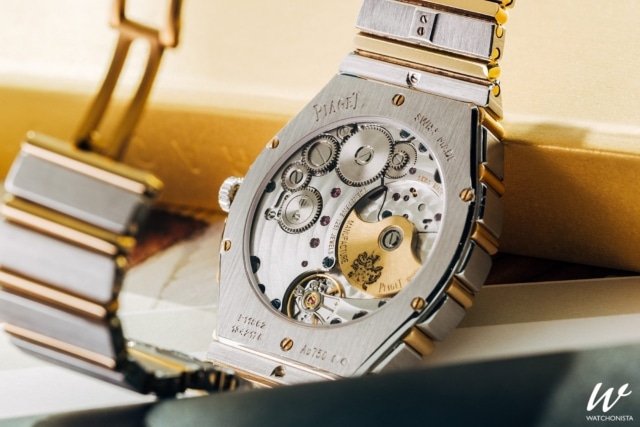
Like its single-gold older siblings, the Polo 79 Two-Tone is powered by the innovative micro-rotor-equipped 1200P1, which at just 2.25mm covers the driving thinness factor of the timepiece’s spirit (and the exhibition caseback gives you an appropriately ample view of its slender beauty).
Piaget has been quite fond of using its 1980’s-era tagline “Piaget Time can only be measured in gold,” particularly in reference to the gold Polo 79 timepieces. Now, with the Piaget Polo 79 Two Tone, that golden story can once again be told, twice.
Lastly, on a side note, Piaget’s partnership with the Art Genève show this year, which starts this Thursday, casts even more significance on this artful new Piaget Polo 79 Two Tone. As the official horological and jewelry partner and sponsor of the newly renamed Prix Solo Art Genève, the maison reinforces its long-standing dialogue with the visual arts, embodying its passion for craftsmanship, contemporary art, and collectible design through a more cross-disciplinary, immersive experience.
Launching today, the Piaget Polo 79 Two-Tone is now available for $91,000 (sales tax not included).
Learn more about the new timepiece on the Piaget website.