The Comeback: Five Heritage Brands We’d Like to See Restored to Their Former Glory



Opinions
Vox Populi: What Real Collectors Think of the Swatch x Audemars Piguet Announcement
Watchonista spoke to seasoned collectors from the US, Europe, Asia, and the Middle East to capture something nobody has really explored yet: the collectors’ perspective on the Swatch x Audemars Piguet phenomenon before the reveal itself.

There are watch launches, and then there are emotional events disguised as watch launches. The upcoming Swatch x Audemars Piguet collaboration – set to be unveiled and become available for purchase on May 16 – falls into the latter category, as it has already escaped the boundaries of a traditional product release.
And yet, between the AI-generated mockups dominating your Instagram feeds and TikTok “experts” dissecting the teaser frame by frame, it is hard to lose sight of the fact that the most fascinating part of this story may be that nobody has actually seen the watch yet.
Still, somewhere between fantasy and marketing genius, the Swatch x AP collaboration has already become real in people’s minds long before becoming real on wrists – if it even ends up being a wristwatch at all.
Which says something important about modern watch culture.
Watchonista’s Vision
At Watchonista, we decided not to participate in the endless cycle of speculative AI renders and algorithmic hype. Instead, we decided to do something else: ask for the thoughts and opinions of actual collectors – you know, people who buy watches, live with watches, and understand what this collaboration could potentially represent beyond launch-day chaos.
And interestingly, their answers reveal something far more nuanced than either blind hype-generated excitement or predictable outrage.
Collectors’ Expectations
For Emil (@watchescarsandstuff), a seasoned collector better known for quietly curating serious watches rather than chasing hype, the collaboration is less about desire than curiosity. “I really don’t have any expectations in this matter,” Emil tells us. “Not my market segment as a seasoned watch collector. But curious to see what happens.”
Like many established collectors we spoke to, Emil draws a very clear line between fascination and participation. The frenzy? Interesting. Standing in line for one? Absolutely not: “There is never a rush to acquire a watch. It’s the time we cannot buy.”
Dr. Audemars (@dr_audemars) shares a similar perspective: “I would not queue outside a store for this, that’s for sure. I’m not the target audience either, being an AP collector for more than 10 years.”
Still, even skeptics acknowledge the strategic brilliance of the move.
Groups vs. Icons
Swatch already proved with the MoonSwatch that luxury symbolism can survive – and even thrive – at radically accessible price points. Whether purists liked it or not became almost irrelevant once queues started wrapping around city blocks.
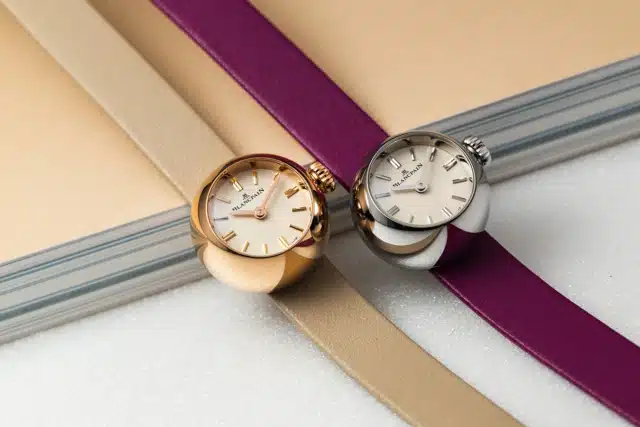
That said, AP and Omega differ in very significant ways. “With Omega or Blancpain, Swatch was still collaborating within its own group,” notes European collector @watchinflight. “With AP, it’s different. We’re talking about an independent and ultra-prestigious maison.”
That distinction matters because Audemars Piguet has historically protected the Royal Oak with almost obsessive discipline. The Royal Oak is no longer just a watch; it is one of modern luxury’s most recognizable design codes.
Which is exactly why this collaboration feels simultaneously inevitable and slightly dangerous.
Jason Chevrolat (@holywrists), watch collector and expert, believes the entire project hinges on one critical challenge: “What interests me most is whether the collaboration manages to respect the power and purity of the Royal Oak’s design without caricaturing it. That balance is extremely difficult to achieve.”
He may well be right. That is because, and let’s be clear here, the risk is not commercial failure. The collaboration will almost certainly sell big. The real risk is symbolic dilution.
And yet, surprisingly, many collectors do not seem threatened by that idea at all.
Drew Coblitz (@coblitz), car and watch collector, perhaps summarized the broader sentiment best: “I think it means that serious brands are actually embracing a little bit of pop culture. This world is serious enough; who says big brands can’t have some fun?”
He also believes the hype itself is already part of the success story: “I’m expecting a heap load of talk, a ton of complaining, and some pretty cool, funky watches to come out. From a marketing and hype perspective, this should manage to be pretty impactful.”
Emotional Attachment
The collectors we spoke with repeatedly returned to one central idea: emotional entry points matter.
Not everybody begins their watch journey with a Royal Oak Perpetual Calendar. Sometimes it begins with something playful, affordable, and culturally visible. Something that sparks curiosity. “This collaboration will never replace a real Royal Oak,” @watchinflight tells us. “But it can create a first emotional connection.”
Jason Chevrolat sees it similarly: “Projects like this may create that first emotional connection, and I think this is ultimately what AP is looking for with this collaboration.”
Even Emil, despite his distance from the hype itself, acknowledges the broader value. “It’s a good and fun way to get the iconic Royal Oak on millions of wrists. Some may catch the collector’s bug and carry on.”
That is why this launch already feels bigger than a product. It feels like a test of modern luxury itself. Thus, the questions this launch may answer are: Can a brand as carefully guarded as Audemars Piguet become more mainstream without losing its mystique? And, can hype culture coexist with horological credibility?
Interestingly, some collectors suspect the answer may lie in avoiding a straightforward Royal Oak homage altogether.
Dr. Audemars believes the internet may already be imagining the wrong product entirely: “I think it will be some kind of Pop Swatch. Maybe it’s even more an accessory than a wristwatch… usable as a brooch, a hanger or a table clock.”
If true, that may be the smartest move, because the moment this becomes a “cheap Royal Oak,” AP risks losing control of the narrative. However, if it becomes a playful reinterpretation of the Royal Oak universe instead, the collaboration enters a very different territory: cultural object rather than substitute product.
Genuine Attention
Perhaps the sharpest observation of all came from Drew Coblitz, who cut through the entire debate with brutal simplicity: “You’re writing an article on it, aren’t you? Mission accomplished.”
But if that is the outcome, it is also the intention.
As Sumei Shum (@sumeiwatches) noted, the mechanism behind the frenzy is no longer purely horological – it is cultural amplification: “It’s leveraging on the popularity of the RO… so many AI-generated images are coming out. Free marketing is always good.”
Exactly. Because before a single watch has reached a wrist, Swatch and AP have already achieved what most brands spend fortunes unsuccessfully trying to achieve: genuine global attention.