The Art of Precision: Favre Leuba Elevates the Chief Tourbillon with a Hand-Guilloché Dial



History
Elapsed Time: TAG Heuer’s Unmatched Chronograph Heritage
The watchmaker has bombastically declared 2026 as its “Year of the Chronograph,” and for very good reason. Its legacy of precision chronography dates back more than 160 years (before it even produced wristwatches). So, today, we’re taking a concise look at TAG Heuer’s past to glean into its future.

It would take far more space than I have here to fully review TAG Heuer’s heritage and ongoing chronograph innovations. However, there are particular moments, models, eras, and phases that help throw a cogent net over the watchmaker’s profound chronograph expertise.
Please note that this piece focuses on purely mechanical chronography, with a quick caveat that the watchmaker has also made impressive strides in precision event timing in the electronic, quartz, and “mechaquartz” arenas.
That said, this mechanical history may help crystallize some thoughts on what may be coming next as TAG hits the chrono-start pusher going into this year’s Watches and Wonders confab in Geneva next week. Enjoy this brief look back.
Early Times
Since its inception in 1860, the watchmaker’s relentless focus on precision has been a primary driving force. This focus led to the 1880 patent awarded to Edouard Heuer for an oscillating pinion (among other patents) that ensured a flawless start-stop function for chronographs on pocket watches.
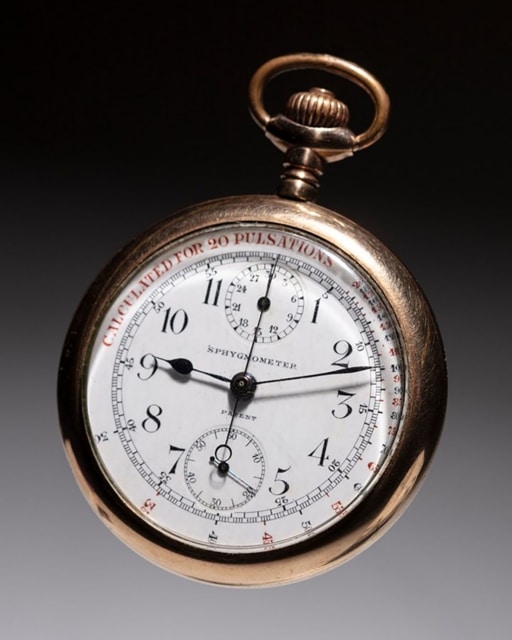
In 1908, the watchmaker introduced a pocket watch with a chronographic sphygmomanometer function (primarily for physicians to take patients’ pulses), where precision and accuracy really came into play.
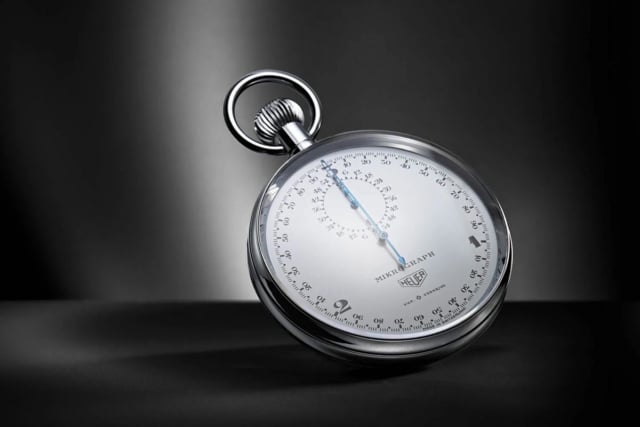
The then-called Heuer produced “dashboard” chronograph timekeepers for the automotive and aviation industries, and, in 1916, the world’s first 1/100th of a second tallying function appeared on a Heuer stopwatch called the Mikrograph (remember that Mikro name, please).
The 1950s saw Heuer pivot away from time-only wristwatches to create early chronograph-equipped timepieces, joining other pioneering watchmakers like Longines, Breitling, and Patek Philippe in offering early wrist-worn chronographic functions (albeit in hand-wound form with somewhat limited availability). This brings us to…
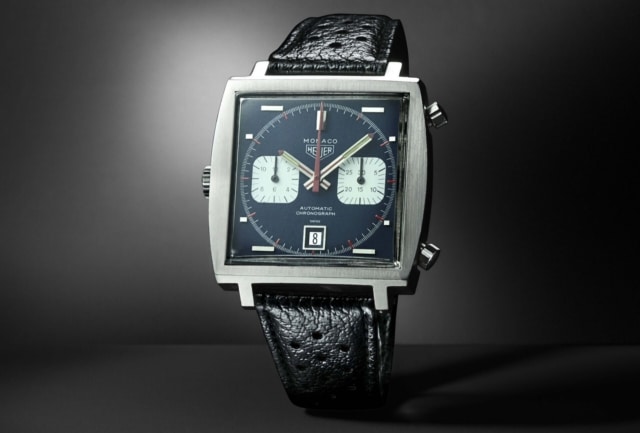
The 1969 Monaco Was the First Commercialized Automatic Chronograph
I’m almost never in the mood to split hairs, but the subhead above is not without controversy (okay, fine, big controversy). Simply said, this is how TAG refers to this watershed Monaco moment, and that’s fine by me.
The ground-breaking Calibre 11 chronograph movement in the 1969 Monaco was a collective effort by Heuer, Breitling, and the legacy watchmakers Buren and Dubois-Déprez (both Zenith and Seiko have some skin in the game, too, BTW).
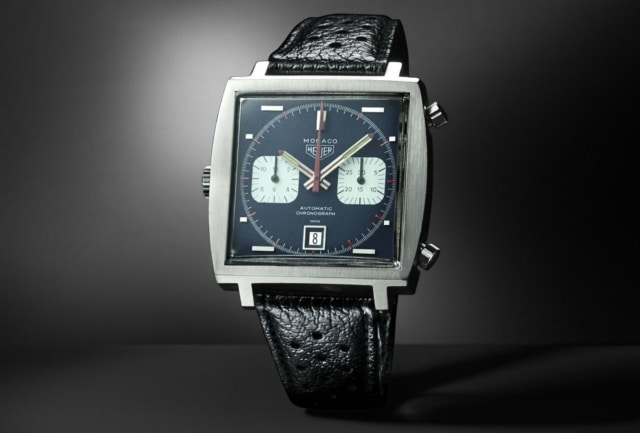
While chronograph-equipped Calibre 11 versions of the Heuer Carrera and Autavia watches were released in concert with the Monaco, the unique, square-cased, sporty, McQueen-worn timepiece certainly drew a deep line in the sand in terms of defining what we collectively think of as a modern chronograph, equating chronography with auto racing, and successfully bringing it all to the public suavely and abundantly. It’s the start of the romance.
Into the Lab: The Mikro Series
By 1985, Heuer was now called TAG Heuer. In the aftermath of the “quartz crisis” of the 1970s and early 1980s, the brand went into the “lab” and doubled down on research and development to push the limits of what mechanical chronographs can achieve.
Under the direction of physics professor and former test pilot Guy Semon, these experimental efforts took inspiration from heritage precision pocket chronographs and proper racing stopwatches to deliver unheard-of precision measurement in a mechanical wristwatch with the “Mikro” series of rarely seen timepieces (here’s that earlier pocket watch moniker again).
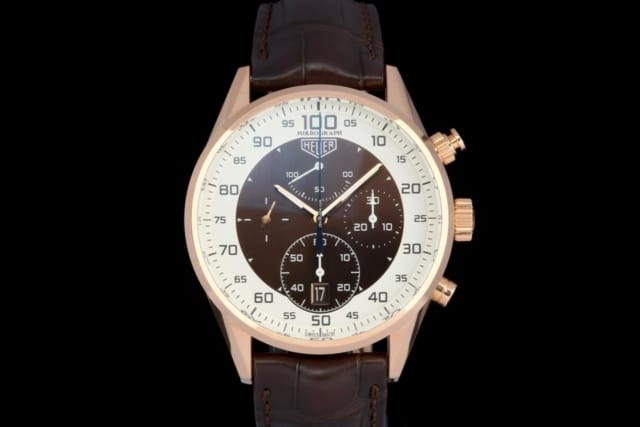
The Carrera Mikrograph 1/100th Second in 2011 featured a separate, dedicated balance wheel, escapement, and gear train for the chronograph function that ran at a blazing 50 Hz beat rate and allowed timing accuracy to the centisecond. All presented in a remarkably accessible, traditional-looking timepiece execution.
The 500 Hz Mikrotimer Flying 1000 followed that same year, increasing precision tenfold to deliver millisecond-accurate timing, and it also approached the limits of what a dedicated chronograph balance-wheel/escapement timing scheme could achieve.
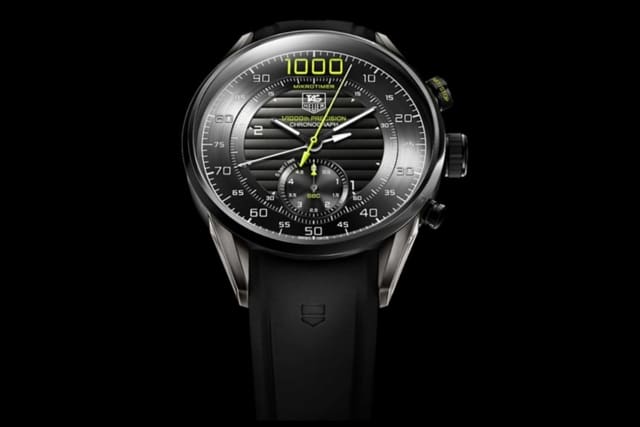
The watchmaker moved to a linear oscillator blade for the chronograph function for the subsequent Mikrogirder in 2012, which delivered timings with an accuracy of 5/10,00ths of a second; a mechanical precision record that remains unbroken to this day. Not to get too nerdy, but a linear oscillator chronograph relies on a disturbing force to begin an oscillating movement, and a restoring force to create a constant, harmonious oscillation; think of a hybrid between a balance wheel and a tuning fork, and you won’t be too far off.
A Look at Today’s TAG Timing
Of course, chronograph innovations continue on pace with TAG’s popular commercial models in the new century; most notably in the Heuer 01 and Heuer 02 automatic chronograph movements for the Carreras introduced in the mid-20-teens.
However, 2024’s introduction of the stunning, halo-effect 41mm Monaco Split-Seconds Chronograph and its specialized TH81-00 movement represents the brand’s first-ever rattrapante chronograph, and another potentially germane point of insight.
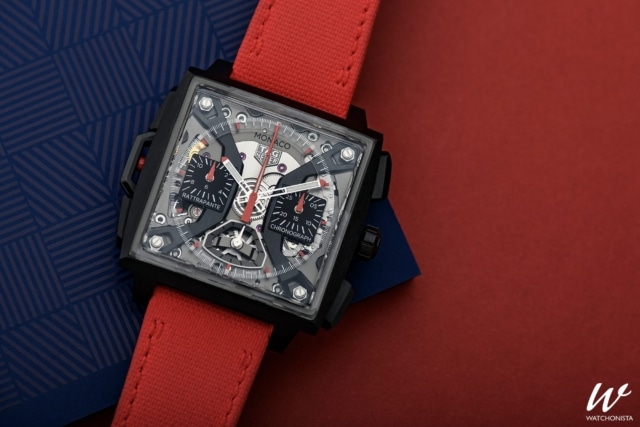
Thus, the question becomes: Does the 42mm titanium Carrera Split-Seconds Chronograph, which debuted at this year’s LVMH Watch Week with the same innovative movement and similar design language and execution, suggest a likely strategy for the brand to use the Monaco to debut important chronograph innovations before they migrate to other models? Only time will tell.
Hit your top pusher to see how quickly you can learn more at the TAG Heuer website.