Omega Speedmaster Effect: Three Collectors, Three Distinct Personalities




Events
F.P.Journe Taps Art Gstaad to Reinforce Its A.R.T. Patronage Vision
In Gstaad last weekend, MAZE/Art Awards F.P.Journe revealed a form of patronage that mirrors the values of independent watchmaking. Beyond sponsorship, this partnership between Art Gstaad and the renowned independent watchmaker positions Switzerland as a discreet yet decisive engine driving the circulation of contemporary art among fairs, collections, and museums.

There is a curious symmetry in the way the contemporary watch industry courts the art world. Both trade in time, after all. One measures it; the other absorbs it, suspends it, and occasionally seems to defy it.
Thus, it should probably not come as a surprise that, increasingly, the most thoughtful maisons are no longer content to hang a painting in a boutique or sponsor a vernissage: they are entering the ecosystem, collecting, commissioning, and endowing prizes. In short, patronage, that old European reflex, has found a new cadence in the age of independent watchmaking.
Into this constellation stepped F.P.Journe, whose support of Art Gstaad feels less like a marketing exercise than a continuation of its long meditation on authorship and rarity. Indeed, the renowned independent brand’s presence in the Bernese Oberland (where Gstaad is located) speaks of a tempo that is more intimate, more deliberate, and, perhaps, more Swiss.
Gstaad, on a Human Scale
Installed beneath the Festival-Zelt marquee in the center of the village, Art Gstaad was conceived – like the MAZE fairs to which it belongs – on a human scale, its curatorial focus as rigorous as its footprint is restrained. Here, historical works by Roy Lichtenstein or Alberto Giacometti converse without spectacle with contemporary voices, and twentieth-century design is permitted to breathe rather than perform.
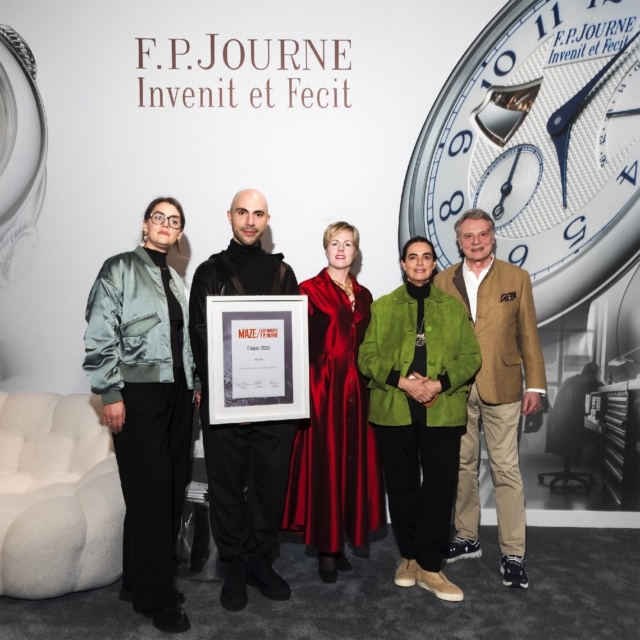
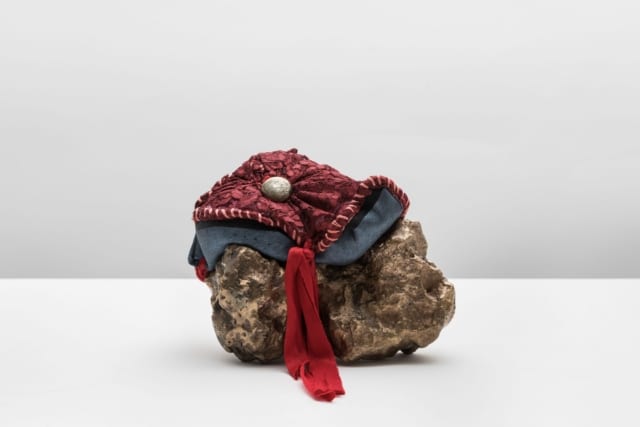
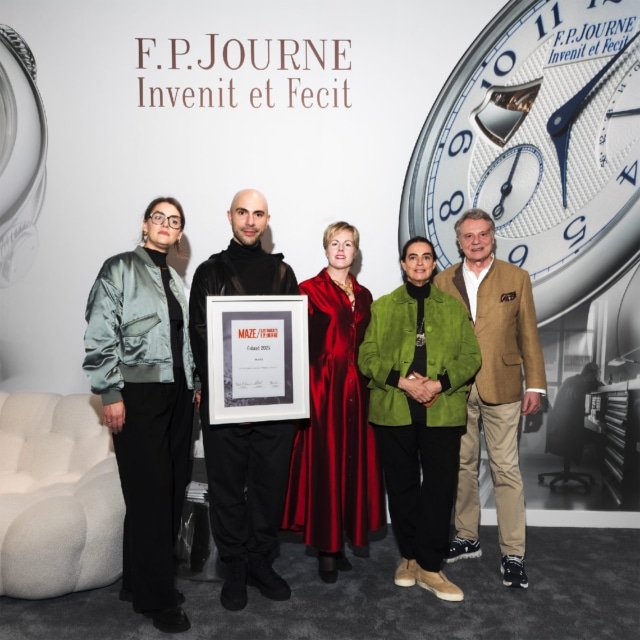
Within this setting, the MAZE/Art Awards F.P.Journe was presented to the Brazilian artist Sonia Gomes for her Untitled (2024), shown by Mendes Wood DM. The gesture matters. Not simply because the work is acquired by the manufacture, nor because it will be proposed to the Kunstmuseum Basel, but because it participates in a chain of circulation: fair to collection, collection to museum, private commitment to public encounter.
The jury – Tatyana Franck (President of L’Alliance New York), Stephanie Seidel (Head of Contemporary Art at the Kunstmuseum Basel), and Maja Hoffmann (Founder and President of the LUMA Foundation) – embodies another kind of network, one that links institutions across Switzerland and beyond.
This raises a larger question: Is Switzerland, long the financial clearinghouse of the art market, becoming one of its intellectual engines as well?
Switzerland as a Cultural Chronometer
It is easy to forget, amid the ski chalets and the discreet wealth, how dense the Swiss art landscape has become. Art Basel, of course, remains the gravitational center of the global fair calendar.
Meanwhile, the LUMA Foundation in Arles is Swiss in spirit if not in geography. Then there are the museums in Basel, Zürich, and Geneva that operate with a confidence that belies the country’s scale. Even the smaller fairs – Gstaad among them – function as laboratories for new formats.
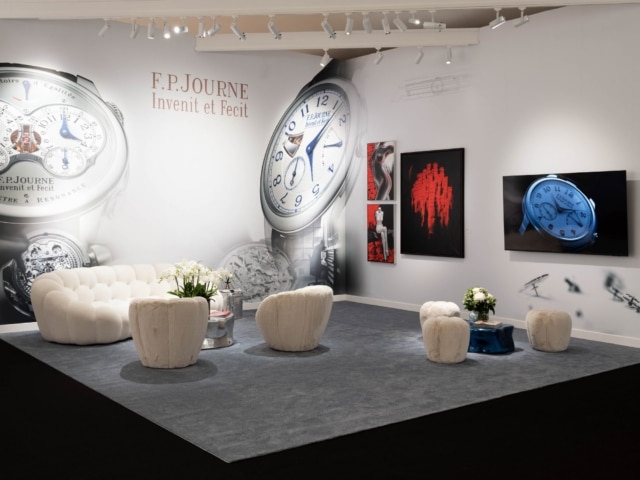
In this sense, Journe’s involvement feels culturally coherent. The manufacture has always insisted on the primacy of the author , with the watchmaker as artist and movement as original composition. Its acronym A.R.T. – Authenticity, Rarity, Talent – might read like a manifesto for independent horology, yet it translates seamlessly into the language of contemporary art.