The Comeback: Five Heritage Brands We’d Like to See Restored to Their Former Glory



In-depth
Stay Golden: A History of Omega’s Winter Olympics Watches
To truly appreciate the launch of Omega’s Milano Cortina 2026 special edition models, one must look back at the timepieces that preceded it.

As many of you already know, Omega and the Olympics go together like heart and soul. The brand has intermittently served as official timekeeper to the event since 1932 (Seiko served in 1964 and 1992, and Longines provided the service in 1972 and 1984 – the last time the summer and winter events were held in the same year). On top of that, Omega has been the official timekeeper of the Paralympic Games since 1992.
For folks who treat watch spotting like an Olympic Sport, Omega has been releasing “Olympic editions” of its watches since the mid-1950s. For this year’s games, Omega began its countdown to the Games’ opening ceremony on February 6th by launching the Speedmaster 38mm Milano Cortina 2026 and the Seamaster 37mm Milano Cortina 2026 in October 2025. Then, last week, the brand unveiled the Seamaster Diver 300M Milano Cortina 2026.
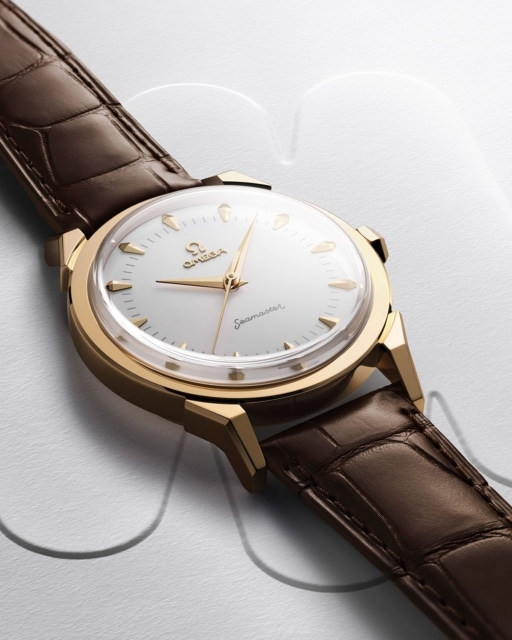
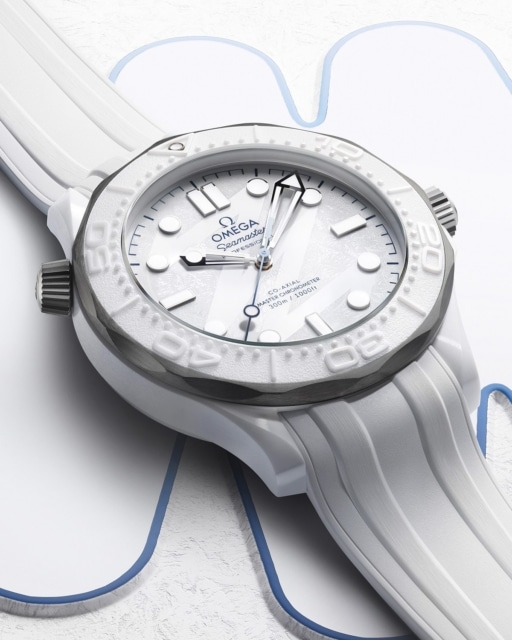
Today, Watchonista is getting into the spirit with a look back at some of the brand’s best Winter Olympic Editions.
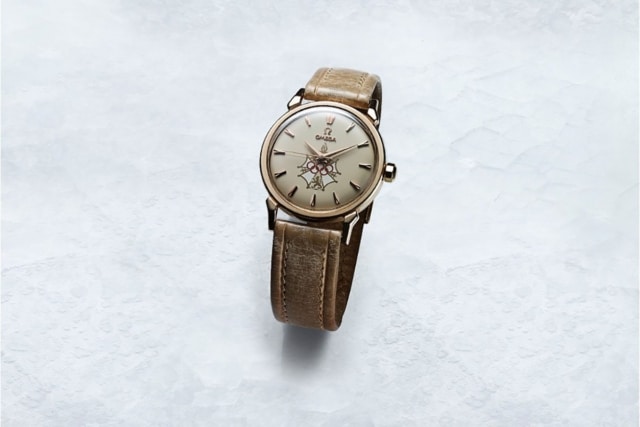
Cortina d’Ampezzo 1956
Cortina first hosted the event in 1956 – the same year Omega launched its first special Olympic edition watch, a Seamaster reference 2850SC. This pink gold edition was decorated with the Cross of Merit above 6 o’clock on an ivory lacquered dial, with the Olympic Rings in either all-red or all 5 colors.
Technically, this watch was introduced for the Melbourne Summer Games, and therefore, after the winter games in Cortina d’Ampezzo. However, because only 100 were produced and presented to high-ranking officials who would have worked on both events (and because we like the historical symmetry), the judges will let it qualify.
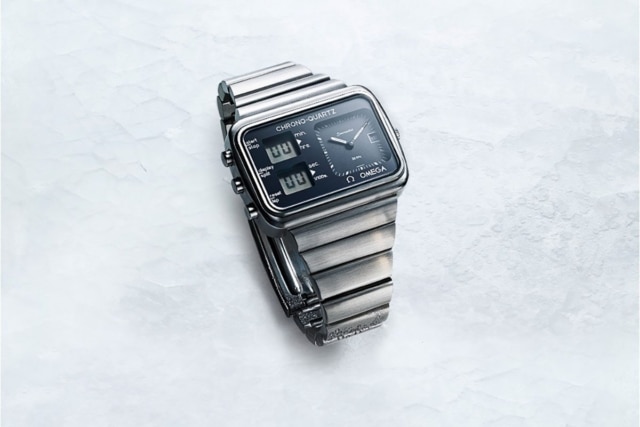
Innsbruck 1976
The Omega Seamaster Chrono-Quartz ref. 196.0052 ST “Albatros” set a new world record as the first quartz timer. It is also one of Omega’s quirkiest watches. The design of this digital-analogue hybrid was meant to mimic the look of a scoreboard, but at 47mm x 51mm, it felt as big as one too.
It is also the only other Omega Olympic Edition to feature the Cross of Merit on the caseback. Because the manufacture produced about 15,000 of these big boys, they are still relatively accessible to collectors.
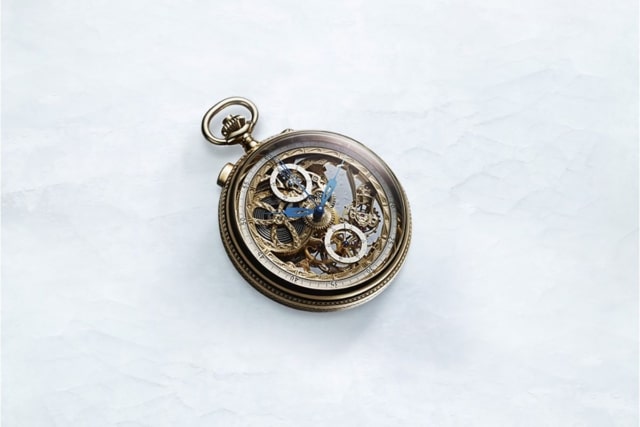
Lake Placid 1980
Lake Placid set the scene for the US Hockey team’s “Miracle on Ice.” Meanwhile, Omega celebrated 50 years of Olympic timekeeping with a very cool pocket watch.
This skeletonized chronograph offered an unparalleled amount of visual artistry for a sports timekeeper, as well as superlative 1/100th-of-a-second precision.
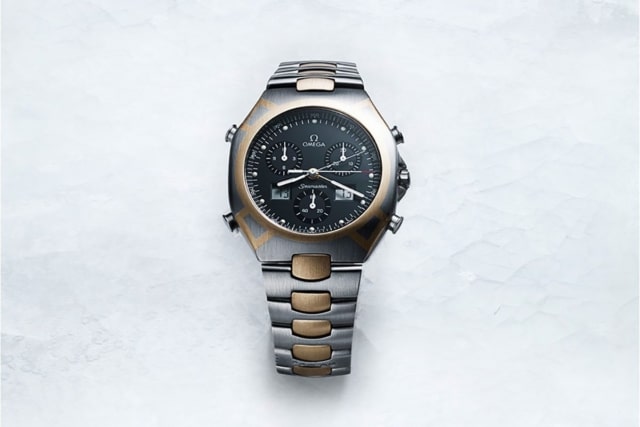
Calgary 1988
If you are of a certain age, your greatest connection to the Calgary Winter Olympics is that the 1993 movie Cool Runnings, which was based on the true story of the Jamaican four-man bobsled team’s debut at the 1988 Games. But watch enthusiasts will find the distinctive Seamaster Polaris DB 386.1232 to be an equally captivating story.
Designed by Gérald Genta and doing double duty as a celebration of the brand’s 150th anniversary, the gold and steel Polaris was an impressive piece of technology for its time, boasting a 1/100th-of-a-second rattrapante and split-second capability. It was released as a limited edition of just 1000 pieces with a commemorative Olympic caseback.
Albertville 1992
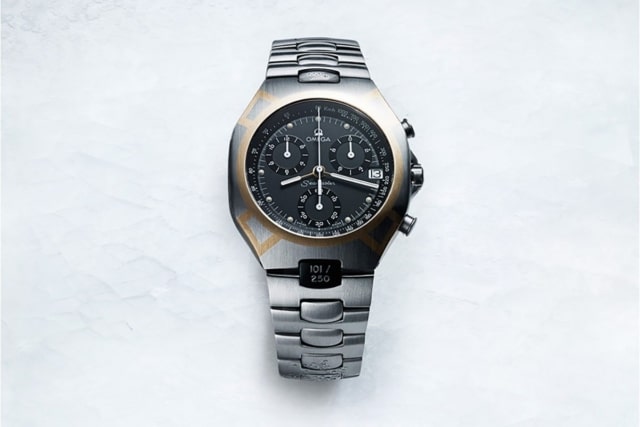
Another winter games, another Polaris Chronograph. But this time the watch was more pared down, with a single bank of pushers and no LCD windows. By now, the brand was leaning into the exclusivity of its Olympic editions. This 1992 version was even more futuristic than its predecessor and was limited to just 250 pieces.
Just as elusive, Omega also released a special Albertville 1992 Speedmaster 175.0043 made exclusively for the French market.
Sochi 2014
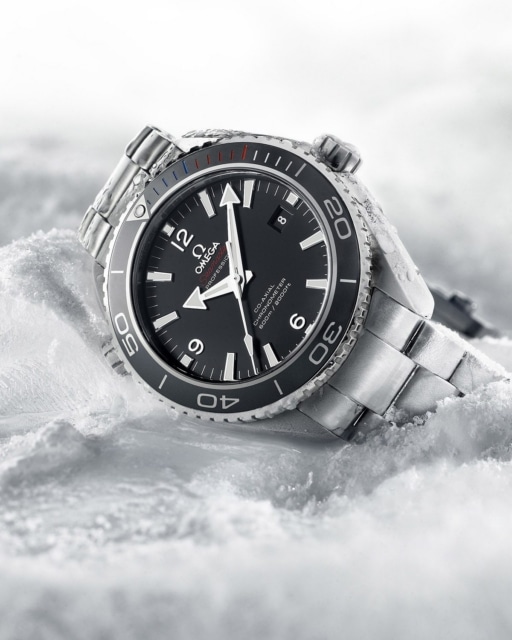
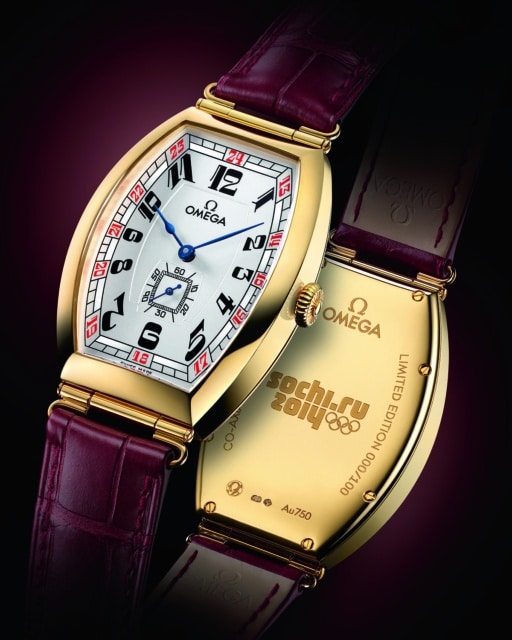
For the 2014 Winter Olympics in Russia, Omega released two commemorative watches to mark the Games: the Seamaster Planet Ocean Sochi 2014 Special Edition and the Sochi Petrograd 2014, a decidedly unsporty watch inspired by a barrel-shaped Art Deco watch from 1915.
The 2014 model featured a silvery-white dial with red numerals (13 to 24) and blued steel hands in tribute to the colors of the Russian flag. The 18K yellow gold caseback was inscribed with the logo of the Sochi 2014 Olympic Winter Games and its limited-edition number (only 100 Sochi Petrograd models were produced).
Milano-Cortina 2026
The Winter Games are back in Cortina (and Milan), and this year Omega is marking its 32nd turn as Official Olympic Timekeeper with the Speedmaster 38mm Milano Cortina 2026.
Once again, the Maison showcases the emotion of its commemorative watches with an elegant, sports-chic take on timekeeping, as this piece features a 38mm fully polished stainless steel and blue ceramic bezel ring with a tachymeter scale in white.
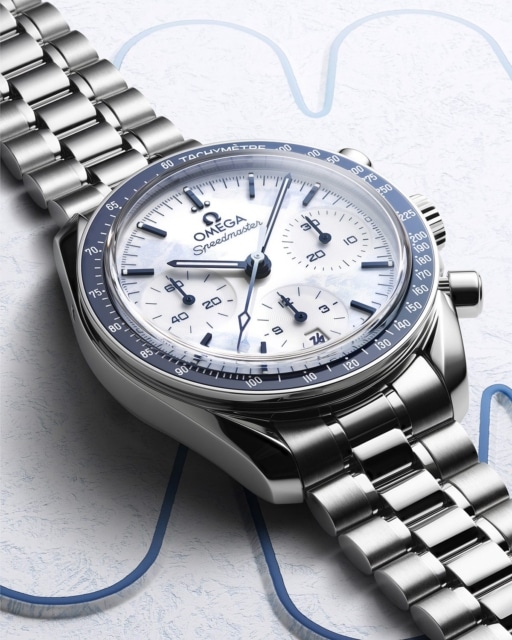
Meanwhile, its wintery white varnished dial has been overlaid with a light blue “frosted” pattern that suggests the “26” of the Milano Cortina 2026 emblem (it reminds us of a figure eight in skating, but you know, a figure 26). Additionally, the watch’s sub-dials are also varnished and finished with a special azurage technique to resemble the crystalline surface of a freshly groomed ski slope.
Additional details include the dark blue Milano Cortina 2026 typography on the date display at 6 o’clock and a stamped Milano Cortina 2026 medallion on the caseback.
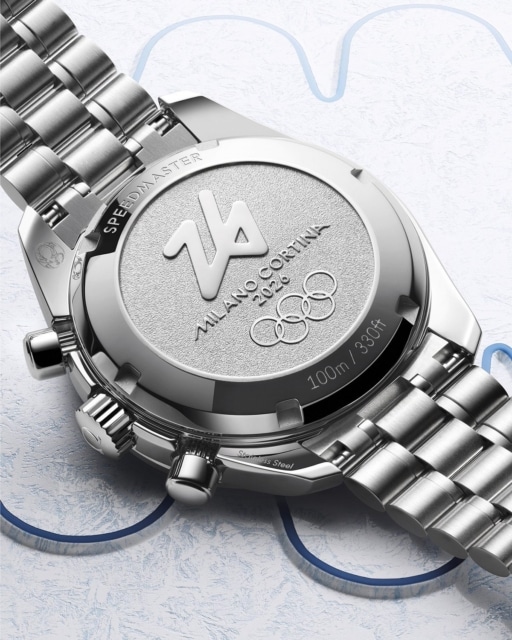
For information about this special edition Speedmaster or the brand’s other 2026 Winter Olympic Games models – the Seamaster 37mm Milano Cortina 2026 and the Seamaster Diver 300M Milano Cortina 2026, check out the Omega website.