TimeForArt Auction Spotlight: Gerald Charles x Igor Mitoraj Luci di Nara


In-depth
Let The Sun Shine In: There’s A New Day Rising for Solar-Powered Watches
The future of photovoltaic watches is so bright, we have to wear shades.


Last month, LVMH Watches Division announced that it acquired a minority stake in the Swiss manufacturer La Joux-Perret, a small but powerful player in the design and production of some of the world’s most sophisticated watch movements, including solar quartz calibres. Previously, La Joux-Perret was wholly owned by the Citizen Group, a pioneer of solar technology.
Fun Fact: Not only will 2026 mark the 50th anniversary of Citizen’s proprietary Eco-Drive technology, which uses any light source to eliminate the need to replace batteries, but the brand estimates that over 100 million batteries have been prevented from stacking up in landfills since creating Eco-Drive in 1976 – equivalent to more than 3,600 Mount Everest summits.
There is a lot of information to parse from this news, but today, let’s look at what it says about the current state of solar-powered horology and what it could mean for the future of watchmaking.
Sun Times
First, a caveat: Solar-powered quartz movements are not coming to replace mechanical calibres. Moreover, the technology will never completely erase battery-fueled timepieces. That said, insiders hope the advances in photovoltaic watches will also energize the industry.
In a joint press release announcing the investment, LVMH Watches (TAG Heuer, Zenith, Bulgari, Hublot, Gerald Genta, Daniel Roth, and L’Epée 1839) and Citizen Group (Citizen, Alpina, Arnold & Son, Frederique Constant, and Bulova) declared that the strategy behind this partnership was to provide new production and innovation capabilities for all the Group’s Maisons.
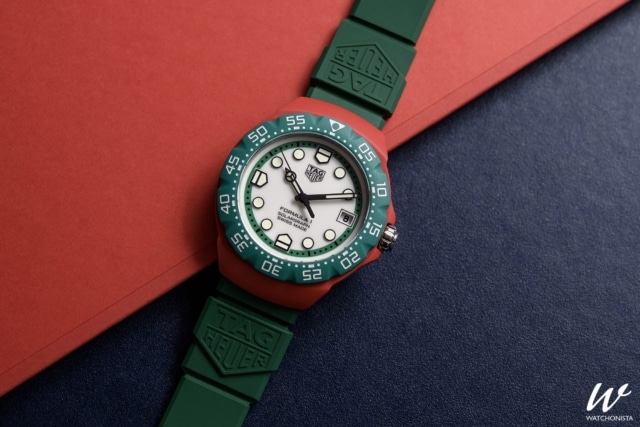
In fact, LVMH has been collaborating with La Joux-Perret on solar-powered watches since 2022, when TAG Heuer worked closely with the manufacturer to develop the Solargraph movements now featured in its Aquaracer and Formula 1 collections. This year, La Joux-Perret teamed up with Tiffany & Co. for the Rope watch – both very successful launches for their respective brands.

“We are pleased to strengthen our ties with La Joux-Perret,” said Jean-Christophe Babin, CEO of LVMH Watches Division, in the joint statement. “Together, we aim to lead the way in sustainable high-precision watch movements, leveraging our unmatched expertise in solar energy.”
Easy Riders
Clearly, both conglomerates recognize the growing demand for solar. But surprisingly, it’s not just about sustainability.
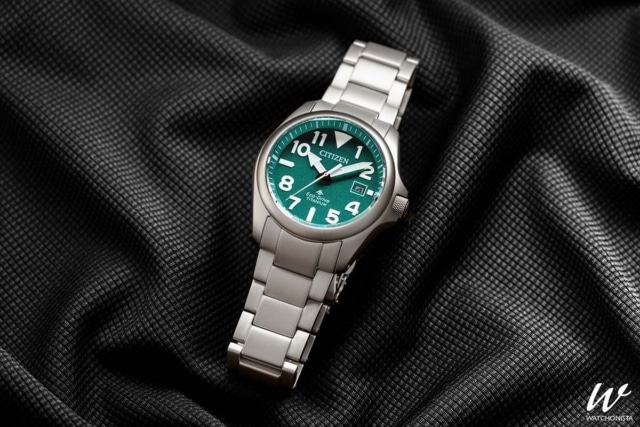
Citizen introduced its first Eco-Drive line to Asia, Latin America, and Europe in 1995 and in the United States in April 1996. Solar-charged watches had existed since the 1970s, but the technology was unwieldy, with highly conspicuous panels on the case. The secret sauce of Citizen’s concept was to place its light-capturing cells behind a transparent dial, making them virtually invisible.
This innovation made solar-powered watches more attractive to buyers, from a design standpoint. They also proved practical because they don’t require the constant winding required by mechanical watches, nor do they result in as many dead batteries as conventional quartz calibres.
We spoke with Samuel Leroux, co-founder of the Canadian independent watchmaker Solios, about why his brand chose to use exclusively solar movements. Sustainability is a core pillar of the company (Solios was the first watch company to get B Corporation certification, which means it meets a stringent social and environmental performance standard). In fact, the brand recently polled its customers, and the survey found that they “like” sustainability but “love” that the watches are easy.
Leroux and his partner, Alexandre Desabrais, started out as watch collectors and still have a deep love for mechanical timepieces. Thus, they are not looking for Solios to compete with mechanical watches, but rather provide an attractive alternative for enthusiasts who also want a low-maintenance watch.
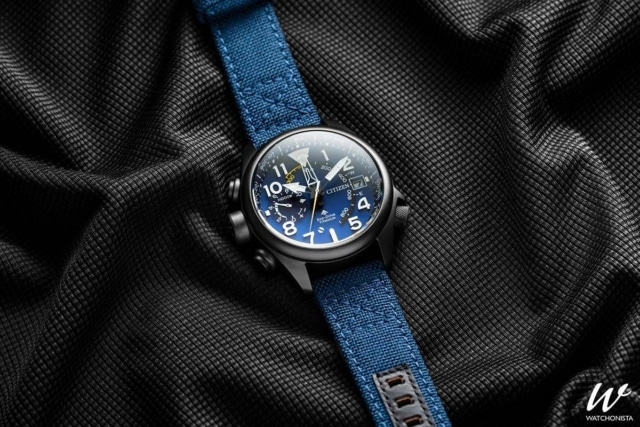
“When a regular quartz battery dies, the watch tends to end up forgotten in a drawer,” Leroux told Watchonista. Besides, even if you change batteries religiously, every time the caseback is opened, it can compromise water resistance.
Leroux also told us that buyers, while noting that, on paper, battery-free mechanical watches are more sustainable, said they appreciate that solar tech has fewer moving parts and therefore requires less maintenance.
In Flux Capacitors
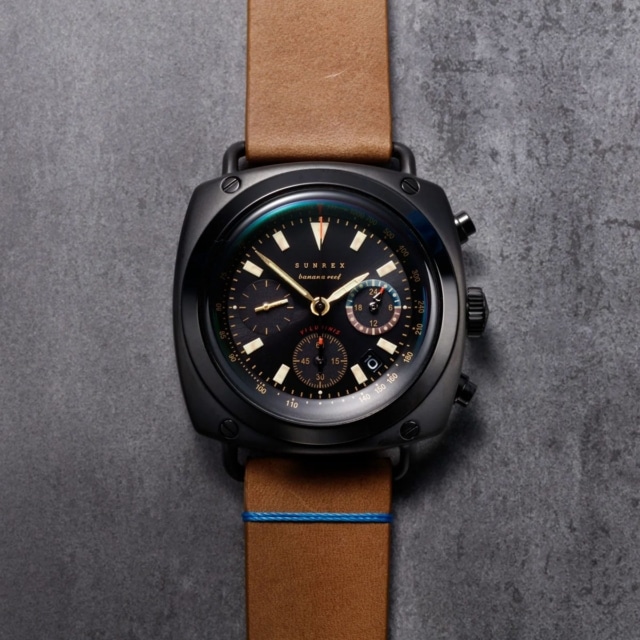
We also talked to Ray Lin, who co-founded (along with his brother Chi) Hong Kong-based Sunrex, which is another brand committed to making watches that, in their words, “keep perfect time with no need to be wound, charged, or have the battery changed.”
As Lin noted in our discussion, Solar tech has been around long enough for buyers to trust it (I personally own a Swatch Solar from the 1990s that is still ticking away); however, watchmakers and manufacturers like La Joux-Perret have been constantly tweaking their movements to improve the power reserve (for example, Casio and G-SHOCK claim that their solar-powered watches can last between six months and two years, depending on the model).
The other big innovation is that the current generation of photovoltaic capacitors can be charged with any light source, including artificial light (such as regular lightbulbs) or natural sunlight.
Material innovations that allow light in have also led to greater design freedom. Complications such as world timers, chronographs, and alarms require additional battery-draining energy; fortunately, solar technology allows for a consistent and reliable power source. Sunrex, for example, specializes in retro-styled chronographs.
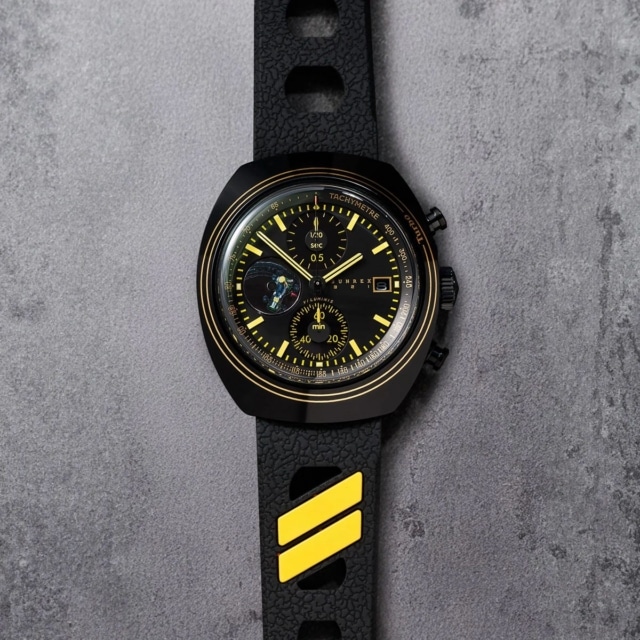
Solar movements are also lighter, so Sunrex can fully commit to its retro aesthetic by opting for chunkier case designs without sacrificing comfort.
Another notable style evolution is that, while other manufactures have struggled a bit to retrofit solar technology into existing collections, start-ups like Solios and Sunrex have built their brands around solar power. Thus, the new generation can use it as a jumping-off point to create some very cool-looking editions.
For luxury maisons and scrappy startups alike, solar power also makes sense on a spreadsheet.
Supply & Demand
Going back to the LVMH/Citizen deal, Yoshitaka Oji, President & CEO of Citizen Watch Group, said in the joint press release: “This strategic alliance with a key partner confirms the recognition of its expertise and opens new long-term development prospects. With this solidified partnership, La Joux-Perret will supply movements with outstanding performance and, together with the LVMH Group, contribute to the development of the Swiss watch industry.”

The production of individual parts for a mechanical movement (machining, finishing, and assembly) also requires energy. Not to mention a looming watchmaker shortage that has led to lengthy waitlists and higher costs. We’re not saying a high-end mechanical watch isn’t worth the time and money, but it also doesn’t hurt to have something available and accessibly priced while you wait.
For retailers and buyers, there is hope that investment in solar technology will lead to stable prices and an improved supply chain. But, as the family-owned store based in the UK, Peter Jackson’s recently posted explainer titled “Why Customers are Moving Towards Solar Power Watches” laid out: versatility is what draws customers to high-end solar-powered timepieces.

The post explains that solar-powered watches are becoming more appealing because of features such as the ability to synchronize with a “home” time zone, GPS, and Bluetooth.
Different Lanes
If quartz couldn’t kill mechanical watches, then solar will never fully replace traditional battery-powered quartz watches (there is still a niche secondary market for vintage electronic timepieces, after all). However, for many enthusiasts, the hope is that solar will overtake traditional battery-powered timepieces, thus reducing the number of batteries that end up in landfills.
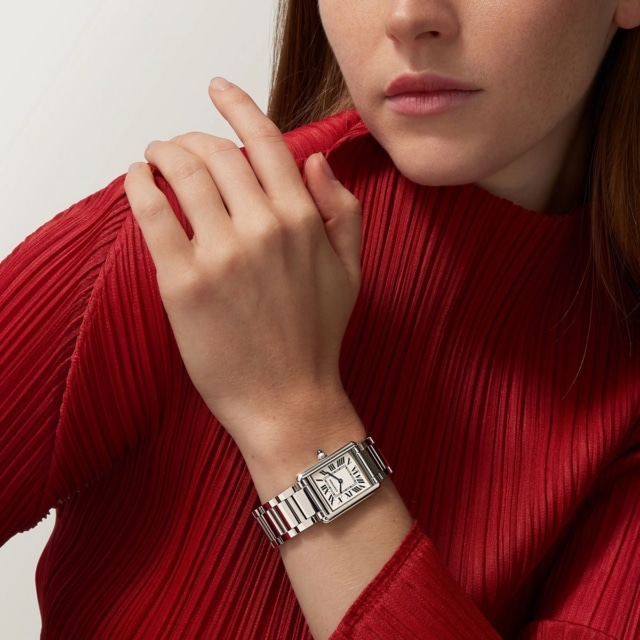
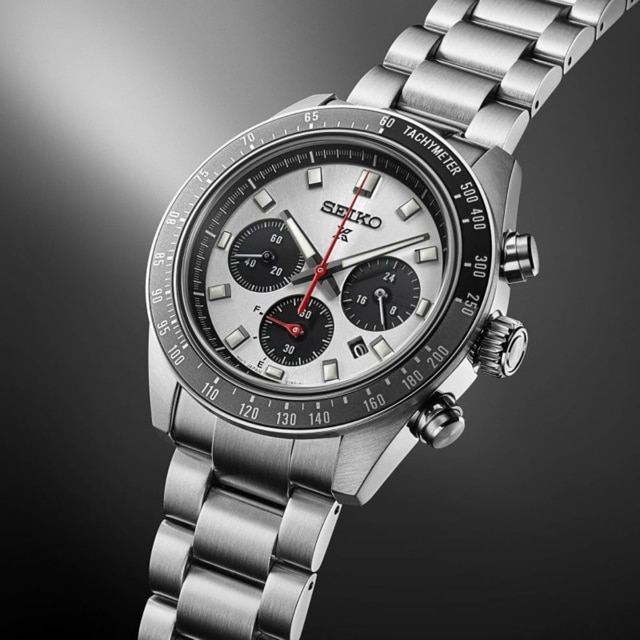
At the end of the day, there is plenty of wrist space for modern solar watches to coexist with mechanical ones. And for collectors, this also means an incredible range of options, from exquisite dress watches, such as the Tiffany Rope and the understated Cartier Tank Must SolarBeat, to robust sports watches, such as the Seiko Prospex Speedtimer Solar Chronograph. These models are built to last and feature elevated details such as fine finishes and high-end materials.
Of course, while solar-charged batteries last a long time, they are not eternal. Still, the big brands should replace them and perform any other servicing when the time comes so that your sunny chum can remain a constant companion for decades to come.
Perhaps that’s the real secret of photovoltaic watches: Solar power makes it easier than ever to enjoy your timepiece.