Why Collectors Should Watch the Henri Grandjean Revival





Collectors Talk, Interviews
Why Collectors Should Watch the Henri Grandjean Revival
A Le Locle name that once timed ships and dazzled maharajas has returned, with a floating triple-axis tourbillon, a CHF 350,000 entry ticket and no more than 25 watches a year. We sat down with watch collector and Henri Grandjean CEO Sohail Aziz to ask the only question that matters: why should we care?

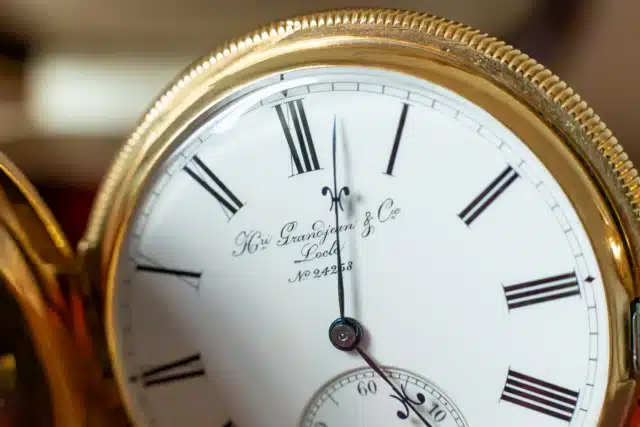
Henri Grandjean was born in Le Locle in 1803, the son of David-Henri, a maker of complicated watches and automata. After six years running the family’s branches in Brazil, he took over H. Grandjean & Cie and made precision his business: marine chronometers, the Neuchâtel Observatory and the Le Locle watchmaking school. “Marine chronometry is not about aesthetics,” Aziz reminds me. “It is a mechanical achievement.”
By 1860, the firm had turned to India, supplying gem-set watches to the maharajas, including the Nizam of Hyderabad. Grandjean died in 1879, and the name drifted into auction catalogues.
The Collector Who Ran Out of Road
Every revival needs someone with more vision than options. Sohail Aziz, the entrepreneur and collector behind Henri Grandjean & Cie, spent years commissioning one-off pieces from the big houses. Then he hit the ceiling every serious collector eventually bumps into.
It started early, with a rare watch “from my grandfather, who gave it to my father, and then I had it as well,” he says. “So I understood the rarity of it.”
“Doing special executions with the major brands limits you to cosmetic changes,” he tells me. What he had in mind was “next to impossible” with an established maison. So he went looking for a name with a story he could finish.

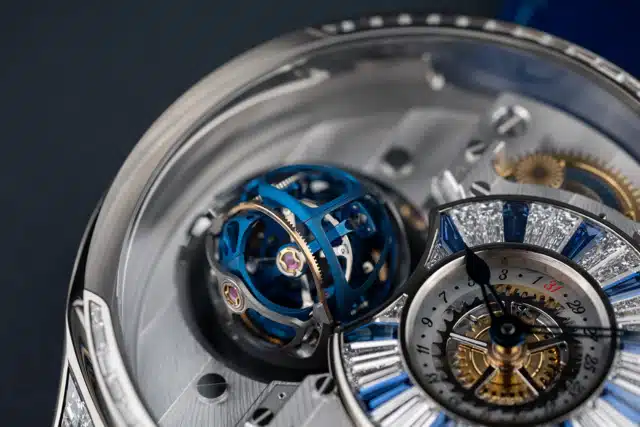
There’s a personal thread, too. Aziz’s family is from India, and Grandjean once made gem-set pocket watches for the maharajas. “It became very much closer to me,” he says. I’d have struggled to resist that as well.
But don’t call it a reissue. “It’s very easy to repeat the past,” he says. “To interpret it and continue the legacy of tomorrow, that has to be achieved and mastered first.”
The Magician, by the Numbers
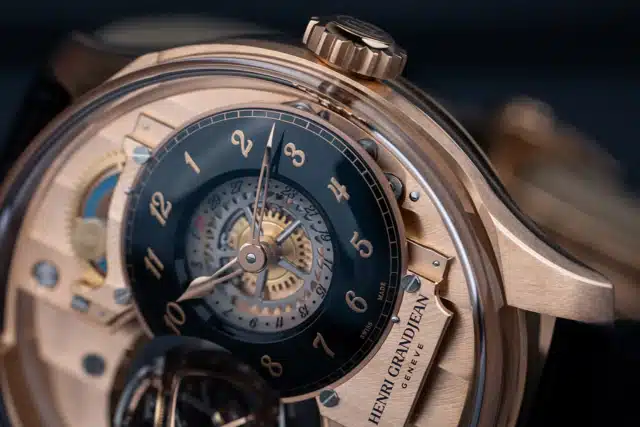
The result is the Magician, shown to the world in 2026. The name nods to David-Henri’s musical automata, two of which sit in the Patek Philippe Museum. The trick is a triple-axis tourbillon, its cages turning in 10, 18 and 60 seconds, that appears to float.
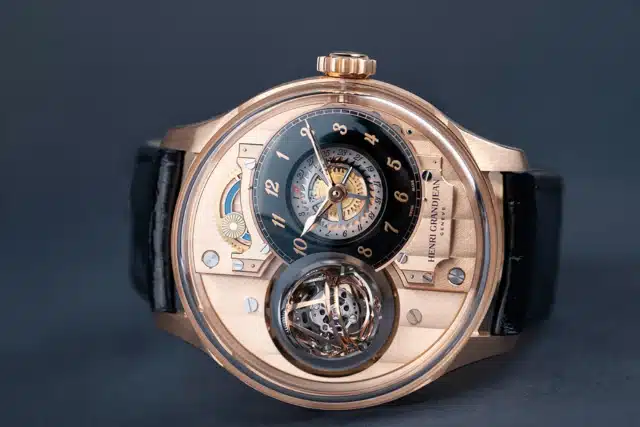
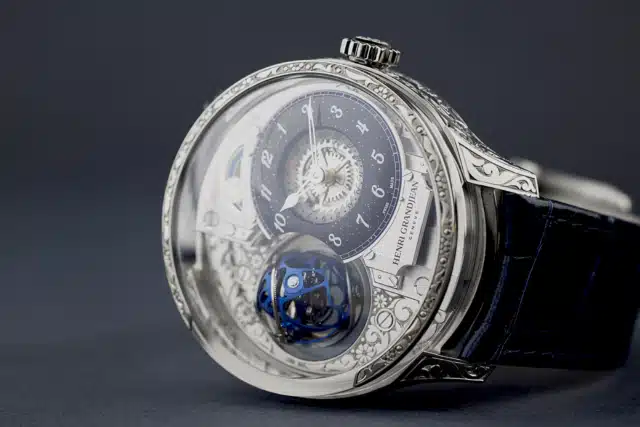
Triple-axis tourbillons aren’t new, and neither are mystery displays. “To do both together, nobody has ever done it,” says Aziz. Some well-known watchmakers who saw the prototype asked him the obvious question: “Does it really work?” It does.
Prices start at CHF 350,000 in titanium, rising to CHF 380,000 in gold, CHF 480,000 when engraved and CHF 990,000 for the coloured-sapphire Atrivm with Grand Feu enamel. Output is 15 to 20 watches a year, “25 maximum if we are able,” from a team of about ten. “Quality, quality, quality,” Aziz says. “We don’t want to come on the market as just another watch brand.”
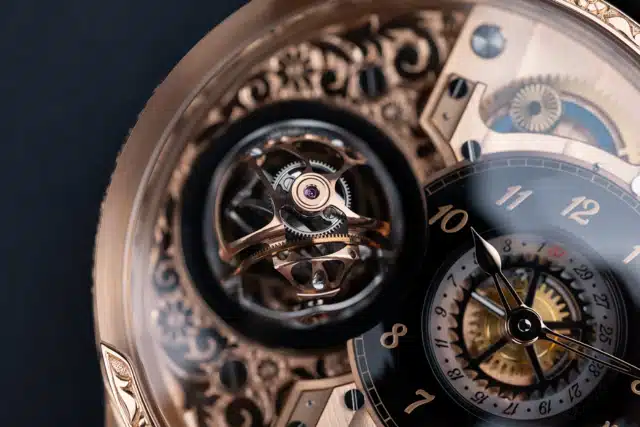
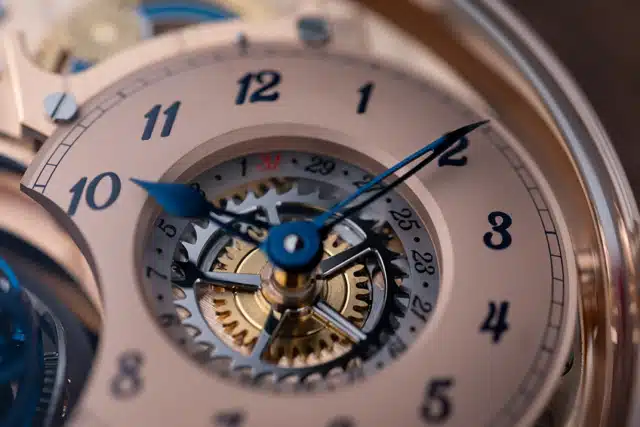
Yes, the hand-wound Calibre 1831’s 40-hour power reserve is modest for this money. Aziz has heard it before. “People say, why is it not automatic, why not more power reserve? We can give you the answer for everything.”
Two Centuries on One Dial
The Magician is really two watches sharing a case. On one side sits the 19th century: off-centre hours and minutes with Breguet-style numerals, a date, a day-night indication and hand engraving lifted from Grandjean’s own pocket watches. On the other sits the 21st: that three-cage tourbillon hanging in apparent thin air.
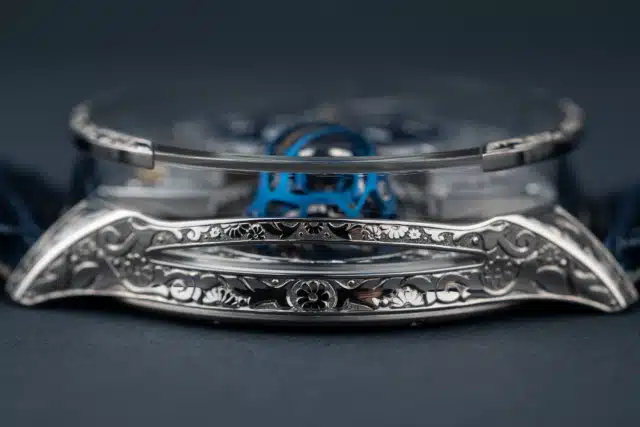
“We wanted to bridge the time gap between the 19th and the 21st century,” Aziz explains. “If Henri Grandjean were alive and sitting with us today, he would have created something different from what we see on the market.” The engraving is no afterthought, either. “We get a lot of our inspiration from the pocket watches he executed in those days. We don’t replicate, we interpret.”
As for the floating cage, he’s happy to keep a little mystery. “When people ask how it floats, we say it’s a magic by itself.”
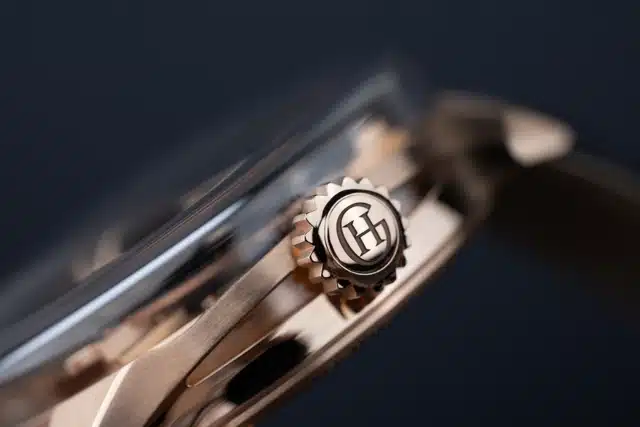
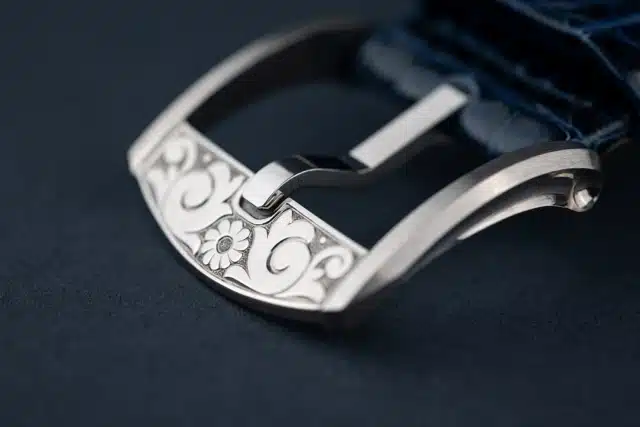
The risk with a dial doing two jobs is that neither gets the room it needs. Here, the restraint of the old side makes the new side look even stranger, which is exactly the point. The movement, case and crown are made in-house, with specialist partners supplying parts such as barrels. “We want to respect the tradition of Swiss watchmaking,” Aziz says. “Swiss, Swiss, Swiss.”
Collector to Collector: My Verdict
You won’t find a Magician in a boutique window. Partners may represent the brand, but they can’t sell it. “We want the clients to come to Switzerland,” Aziz says, “to show them what goes into this product, how difficult it is to make.”
“It’s like a Ferrari,” he says. “You want to sit in it. The best pictures and the best articles are not enough.”
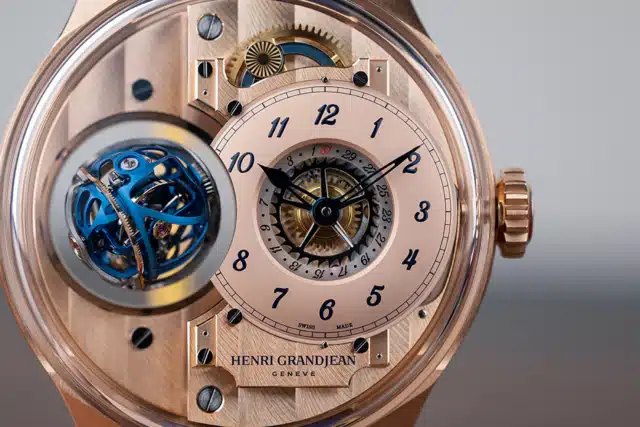
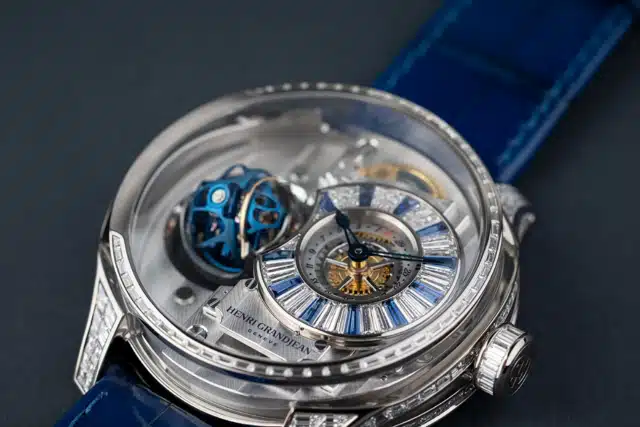
Here’s what I like. Twenty-five watches a year, built in-house, is not a marketing slogan; it’s arithmetic. And Aziz had the nerve to build something new rather than redraw an old pocket watch.
Here’s what gives me pause. CHF 350,000 is a lot to ask, and three cages floating on sapphire will need decades to prove themselves. Aziz knows it. Heritage alone, he admits, “is just not enough. We have to build the trust over time.”
He’s right. Henri Grandjean earned his reputation one chronometer at a time. His successor will have to do the same. I’ll be watching, and so should you.
For more information, please visit Henri Grandjean’s website.
Advertisement