Meet the Artist: Maarten Baas and His Theatrical Clocks


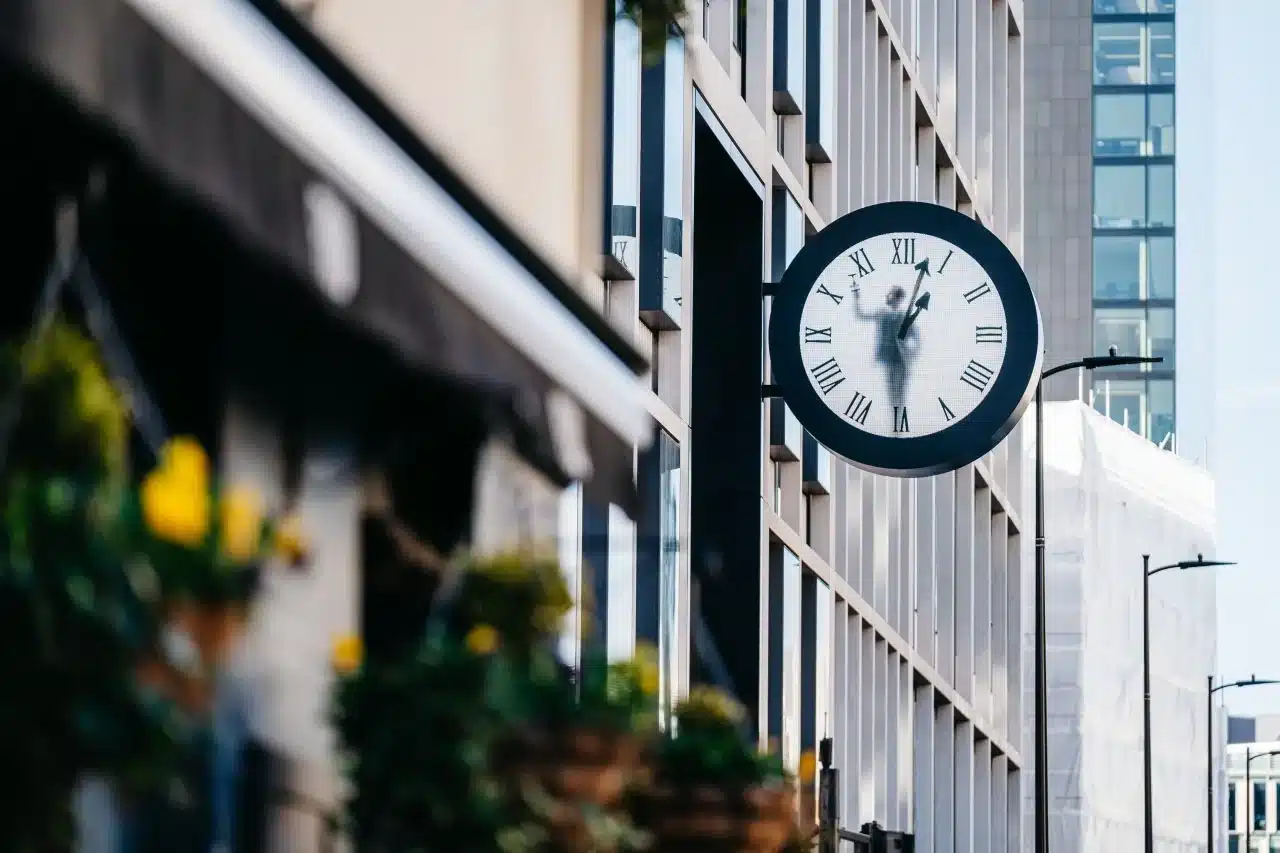
Paddington Clock, London © Maarten Bass
The Atelier
Meet the Artist: Maarten Baas and His Theatrical Clocks
Today, we’re looking at this acclaimed Dutch artist/designer’s famous timekeepers.

Why do we think of artisans and artists as separate? Why is a clock considered craft while a film about timepieces (such as Christian Marclay’s The Clock – a 24-hour video supercut of scenes from film and television that feature clocks) is regarded as art?
For Dutch artist and furniture designer Maarten Baas, the answer is that craftwork can also be considered art. Why? Because his Real Time series, which bridges the gap between art and craft, makes you think (the weight of time has been a constant theme in his work); it transcends function (his most famous works include elements of theatre and choreography); and, the series has an ethereal beauty that literally makes the viewer stop in their tracks and live in the moment.

So, with all that being said, let’s take a closer look at some of Baas’s work.
About Time
While waiting for a connection to Geneva last spring, I decided to seek out one of Baas’ most famous works in his Real Time series: the Schiphol Clock (2016), located in Lounge 2 at Amsterdam’s Schiphol Airport.
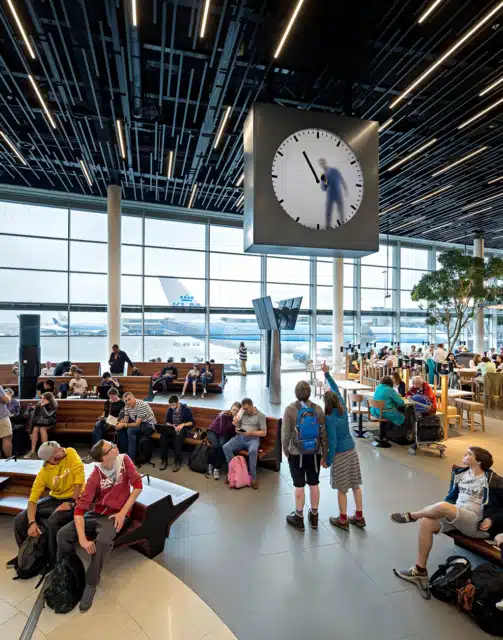
I wasn’t sure I would have time to find it during my short layover because Schiphol Airport is a huge, sprawling hub filled with cranky passengers rushing around with their rollie bags, trying to locate their gate. But then I came across a circle of people all quietly looking up at a big, translucent box with what looks like a man (wearing a blue boiler suit, painting and erasing clock hands minute by minute) trapped inside. It’s an illusion, of course: the man, his paint roller, yellow rag, and red bucket are a digital projection.
As previously mentioned, this clock is part of a larger, ongoing installation series called Real Time. Launched in 2009, the project comprises works in which people are filmed acting out the motions of the passage of time. Among the first pieces he presented in this series was the Sweeper’s clock, which featured sweepers being filmed as they moved around trash to create the analog clock hands.


Other versions feature people painting a digital display onto a translucent screen or filling in the analog hands of grandfather clocks. In each instance, he films the players for 12 hours, then loops the footage so that it runs for 24 hours, 365 days a year.
What makes Schiphol Clock especially meaningful is that the airport is also open all day and all night. It’s a permanent piece of public artwork that is generally witnessed by people who are just passing through.
For The People
For Baas, time has always been an illusion. Critics first took notice of him in 2002 with his graduation presentation at the Design Academy Eindhoven. This collection, called Smoke, consisted of furniture – pianos, sideboards, doorways – that he burnt and then encased in an epoxy resin, which, oddly enough, made them strong enough to become functional again.
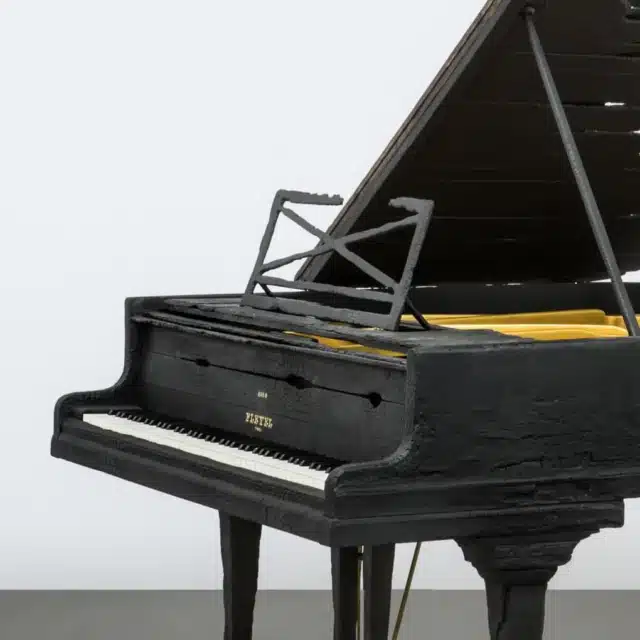
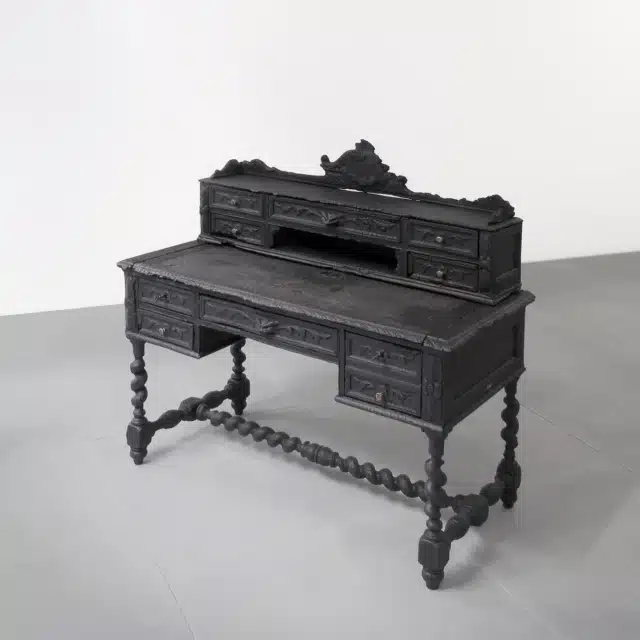
While this project did not directly reference clocks, it marked the beginning of his explorations of permanence and impermanence. On his website, Baas writes: “In nature, everything is in flux, which creates a certain beauty. Yet, it’s a very human tendency to keep things as they are supposed to be and keep them beautiful as they originally were. Smoke plays with both perceptions of beauty.”
The attention he garnered from Smoke led to a series of commissions from museums, galleries, and private collectors. One of the most notable collaborations came just two years after his grad show.
For Where There’s Smoke… Baas blowtorched iconic furnishings, including a Gerrit Rietveld Zig Zag chair and an Antoni Gaudí Calvet armchair. “I wanted to show a timeline – from very classic stuff, baroque pieces, everything before 1900 until now,” he told Metropolis magazine in 2004.


Private commissions led to public works that marry theatre, art, film and design in a series of clock designs. If you have a longer layover in Amsterdam, for example, you can visit Grandfather Clock (2009) at the Rijksmuseum, where it sits amongst the Old Masters like Rembrandt and Vermeer as well as more modern artists such as Van Gogh.
According to the museum’s catalog, “The museum captures time, standing as a beacon in a changing world. Maarten Baas is one of the Dutch designers who are making an international name for themselves.”
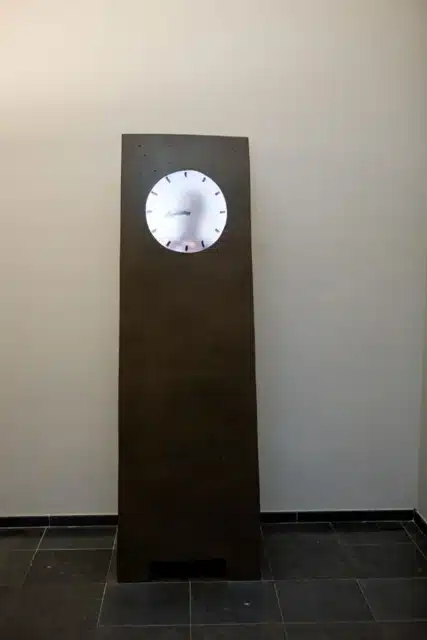
According to the museum’s catalog, “The museum captures time, standing as a beacon in a changing world. Maarten Baas is one of the Dutch designers who are making an international name for themselves.”
You needn’t travel to the Netherlands to take in Baas’ public projects. In 2010, for Milan Design Week, he developed an Analog Digital Clock iPhone app based on the Analog Digital Clock (2009) from his Real Time series.
In 2021, another Real Time clock was unveiled at Paddington’s Eastbourne Terrace in London, UK. This clock stands 7.8m high, and inside, an actor dressed in 19th-century fashion can be seen painting and removing the clock’s hands, marking time minute by minute.
Baas also has pieces in the permanent collections of the Victoria & Albert Museum in London and the Museum of Modern Art in New York.
Today, Baas works from a large warehouse in Den Bosch in the south of the Netherlands with a team of 10 employees, some of whom work at the office and others at the workshop. “I see there as my kindergarten, my playground, in which I can experiment with all the techniques and materials that I wish to,” he says about his studio life.
For more information about Maarten Baas, check out his website.
Advertisement
0 votes