Milano Watch Week 2026: An Insider’s Verdict on Europe’s Rising Watch Event






In-depth
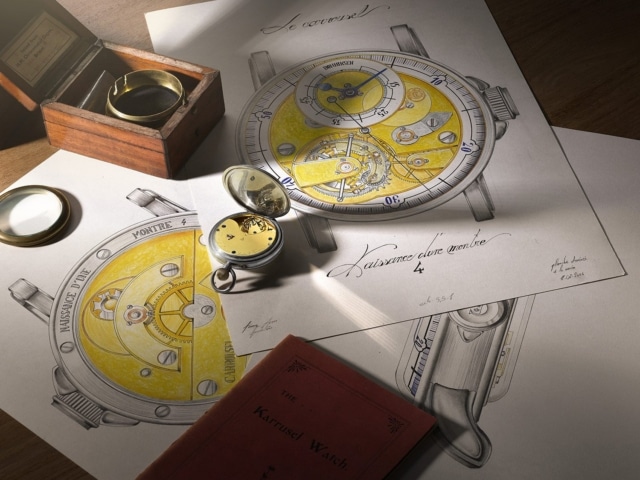
Naissance d’une Montre 4: Inside Bonniksen’s Radical Case for “Le Carrousel”
Naissance d’une Montre – or “Birth of a Watch” – is one of the most demanding labels in horology: a program that produces watches entirely fabricated by hand, with each chapter assigned to a brand willing to stake its reputation on the process. Now, its fourth chapter belongs to Bonniksen – a brand rescued from watchmaking history only a few months ago.

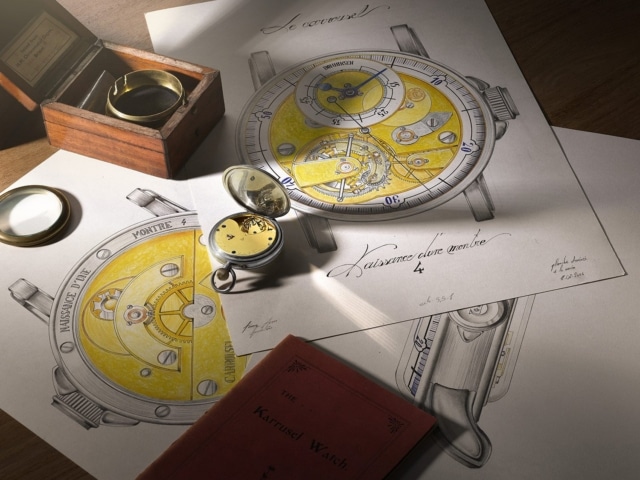
As rotating regulating devices invented to fight gravity’s slow corruption of the balance spring, the carrousel and the tourbillon are widely treated as siblings.
However, as Maximin Chapuis, Bonniksen’s master watchmaker, will tell you, they are not the same animal at all: “In a carrousel, there is absolutely nothing fixed.” That means: No wheel locked to the plate; no anchor point; just two mobiles spinning in relative motion inside a cage that is itself in motion, creating a differential velocity problem that has defeated most watchmakers for 130 years.
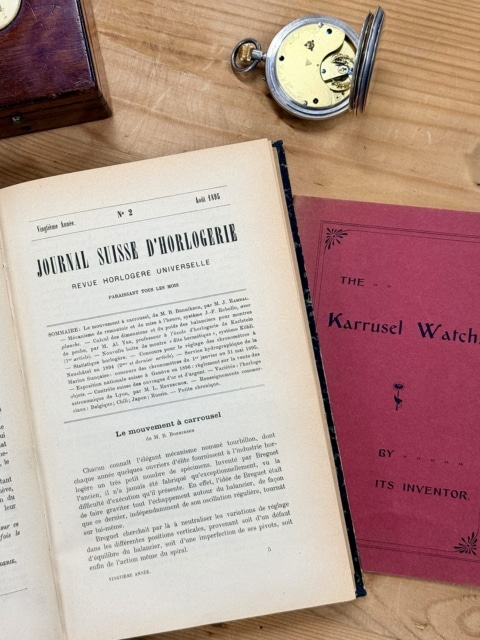
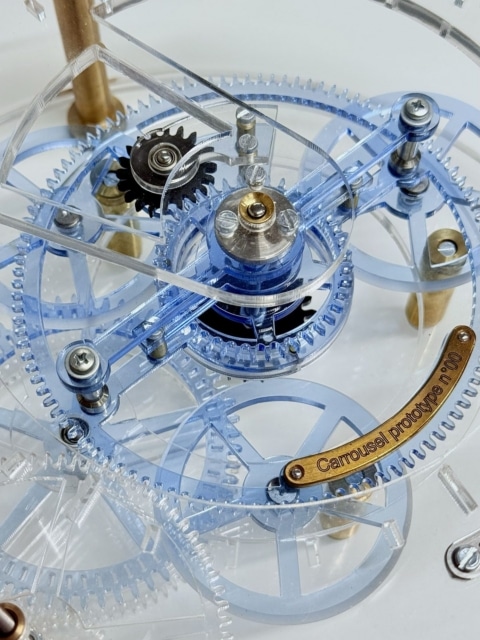
Until now, there has been exactly one manufacturer in the world that has solved this conundrum. And Blancpain did it using a flying carrousel supported on a single pivot…simple. Bonniksen’s, however, will be fully pivoted, top and bottom, which means more components, more architecture, and exponentially more complexity.
The pivoted carrousel was Bahne Bonniksen’s own final obsession. The Danish-British watchmaker invented the complication in 1894, founded the British Watch and Clock Makers’ Guild in 1907, and never finished his ultimate version of the mechanism.
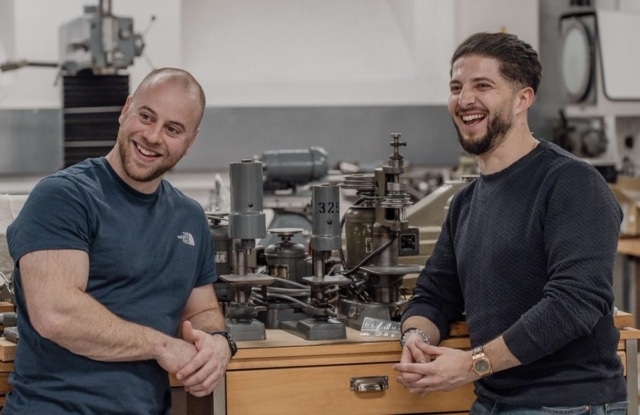
Jason Chevrolat, 36, is an entrepreneur, consultant, and watch expert who, before founding Bonniksen, which was officially revived as a brand in April 2026, as its sole investor, built and led multiple business units – a career grounded in dual master’s degrees in entrepreneurship from ESC Troyes and engineering from the École Polytechnique de Paris Sud.
Beside him, Maximin Chapuis, 30, brings a watchmaker’s pedigree earned on the bench rather than in the classroom: trained in the Vallée de Joux, then refined at the Paris school of watchmaking under Michel Boulanger, and a professor at WOSTEP, the institution that has trained the industry’s finest for decades. Together, they intend to complete what Bonniksen left behind.

“We are making a proposal to continue the work of the inventor of the carrousel,” Chapuis says, without a trace of false modesty. The cage rotates once every 30 seconds – a specification that required running algorithms to find viable gear ratios, since the differential equations governing a carrousel’s gear train are categorically more complex than those of a tourbillon.
The Atelier’s Architecture
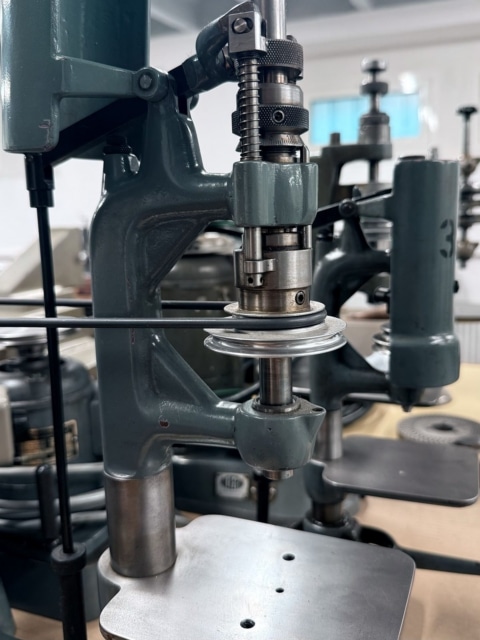
The Bonniksen workshop in La Chaux-de-Fonds stretches across 130 square meters. Around 30% of the tools were accumulated personally by Chapuis over ten years; the rest – heavy mills, watchmakers’ benches – arrived in the last 18 months. None of the machines use CNC.
In fact, all of them are at least 50 years old because, below that threshold, vintage precision equipment loses the calibration stability required for manual production to micron tolerances. Each one has been fully disassembled, cleaned thread by thread, and rebuilt by Chapuis himself. The machine park is, he notes, identical in type to Greubel Forsey’s handmade atelier, except they are six people.
“Handmade” Under The Loop
Here is where a problem arises, and Bonniksen sits squarely inside it: “Handmade” is a term that has been stretched so far in watch marketing that it now covers a vast and contradictory range of practices, from hand-applied beveling on a CNC-machined plate to a watch built entirely by one person from raw metal.
In fact, when most brands claim the “handmade” label, they mean hand-finishing has been applied to components fabricated by computer-controlled machines. It is beautiful work. It is not what Bonniksen does.
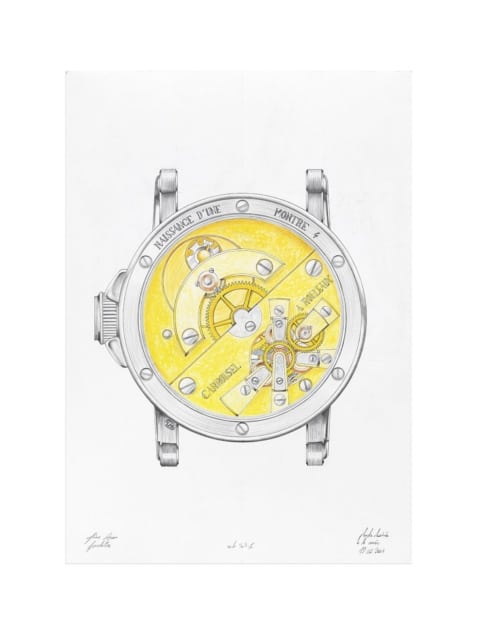
What Bonniksen does might more accurately be called from-bar fabrication – or, in the French tradition of the craft, vraie fait main: truly hand-formed. Every component starts as raw bar stock. No generic parts. No existing gear trains repurposed.
“We start from zero,” Chevrolat tells Watchonista. It is not the machine that guides the work; it is the human hand that guides the machine. One wrong turn of the crank on a nearly finished component, and the whole piece is scrapped. “If you’ve done 95% of a finished component and add one extra turn, you start over. There’s no secret,” he adds.
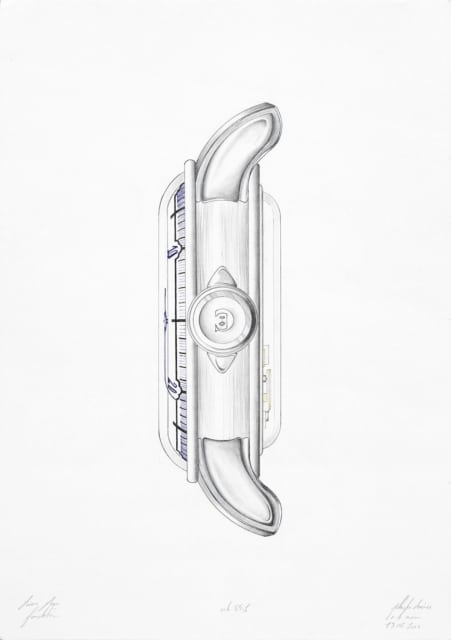
A single mainplate can take a month. Even the hairsprings are being developed for in-house production. In the best-case scenario, all components would be produced in the workshop except the mainspring barrel, sapphires, rubies, and straps.
For those who understand what it means when a 30-year-old watchmaker says he can spend a month making one plate, by hand, in a workshop built from nothing – the pivot is ready. The cage will turn. And Bahne Bonniksen, who died before he could finish it, would recognize every gear.
The NdM4 – and What Comes After
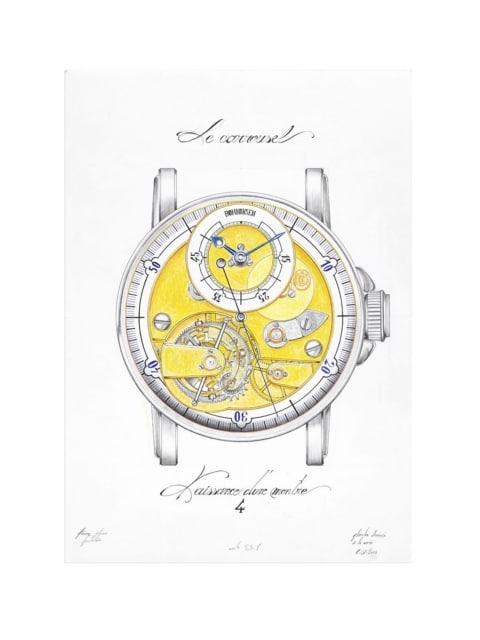
The 39mm Naissance d’une Montre 4 “Le Carrousel” is Bonniksen’s debut: the proof of concept. It is the fourth chapter in a program overseen by the Time Æon Foundation, the independent body that governs the NdM label. And technically speaking, the NdM4 is the most complicated Naissance d’une Montre ever made.
Priced at CHF 840,000, it sits fractionally below the CHF 850,000 price tag of Ferdinand Berthoud’s NdM3 while, by the founders’ account, being technically more demanding. Thirteen pieces will be produced: one prototype, which will go to the Phillips auction in 2029; one school watch to be donated to the Foundation; and eleven production watches to be sold by Bonniksen.
But the NdM4 is not the whole story. It is the opening statement. Chevrolat’s longer plan is to launch a commercial collection made with CNC – the inverse of Greubel Forsey’s historical path.
“They started with the best CNC standards, pushed technique and finishing to the highest levels, built a brand, then made handmade,” he explains. “We take inspiration from those who we admire, and we do the opposite. We set the bar first.” The from-bar work will remain Bonniksen’s summit – available, eventually, only to clients who have already collected other pieces from the house.
For more information, check out the Bonniksen website.