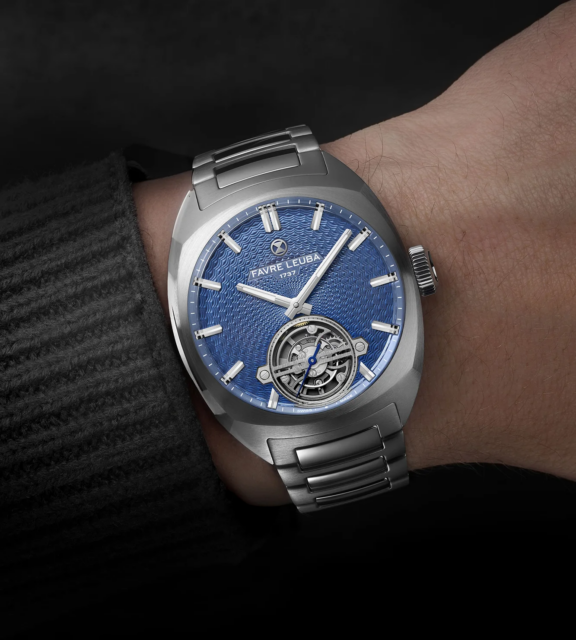
The Art of Precision: Favre Leuba Elevates the Chief Tourbillon with a Hand-Guilloché Dial


Vintage
The Comeback: Five Heritage Brands We’d Like to See Restored to Their Former Glory
Niche but respected names sought after by vintage collectors, these brands would also make for exciting revivals.

I don’t want to brag (okay, I really want to brag), but sometimes consider myself a watch-collecting Cassandra (the doomed Trojan princess cursed by the god Apollo to see the future but never be believed and who also got cut from Christopher Nolan’s adaptation of The Odyssey).
For example, I started collecting Universal Genève about 15 years ago after picking one up at a pawn shop. This purchase predicted the future in many other ways: It was a tiny watch with a hardstone, tiger’s eye dial. All things that are once again on trend.
I also don’t want to be a gatekeeper. That’s why I was super excited when Georges Kern resurrected Universal Genève and then established the House of Brands to oversee the revival. And this month, the House of Brands welcomed the historic watchmaker Gallet to the family.
I trust Kern will take good care of the legacy of UG and Gallet, but I also have a shortlist of other marques that I predict would also do well if resurrected.
Elgin
American watchmaking doesn’t get a fair shake. The USA was at the vanguard of the industry’s industrialization. But American watchmaking never recovered after factories were repurposed to support the WWII war effort.
Elgin was the most prominent of these manufactures. Founded in 1863, the company captured the can-do ideals of American capitalism, producing mainly inexpensive but reliable models alongside a smattering of upscale collections.
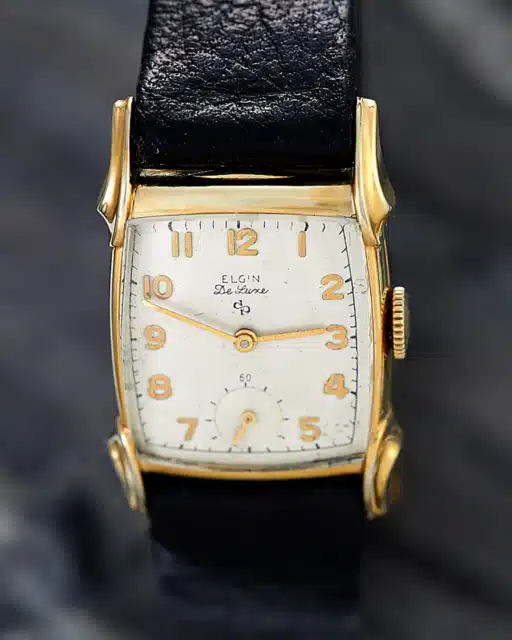
Although the company ceased production on American soil in 1964, vintage Elgin appeals to modern collectors for two reasons. The first is that they took design risks. Some of the brand’s Art Deco-era wristwatches – such as the Lady Elgin “Tiger and the Lady” – represent the aesthetic peak of the style.
And while Elgin mastered mass production, it also innovated: In the final years of American watchmaking, Elgin launched a “chronometer-quality” luxury self-winding watch in its premium Lord Elgin line. These American-built automatics came cased in stainless steel and solid gold.
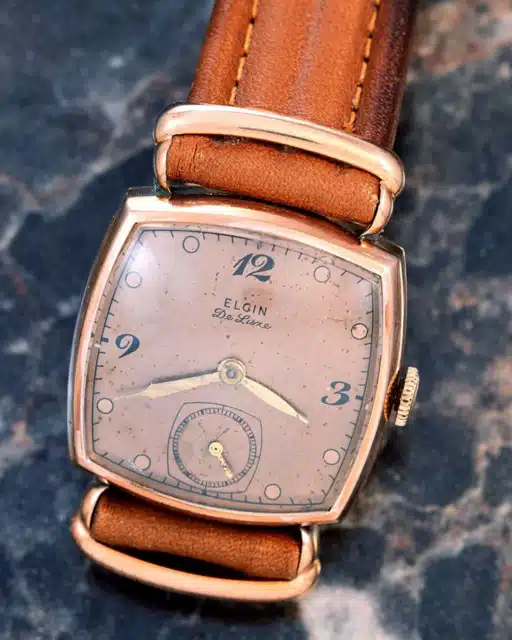
Which brings us to why we think Elgin needs a respectful rebirth. As mentioned, not all the back catalog is gold. And the Elgin name has been bought and sold many times since they officially shut down in 1967, so there’s a lot of junk drawer versions out there. In a way, that’s proof that the legacy is still strong.
The dream scenario for a strong return to form would be a small collection based on the brand’s collectible vintage pieces: Enameled cases from the 1920s; duo-dialed “doctor’s” models from the ‘30s and ‘40s; and Lord Elgin direct read watches from the 1950s.
Gruen
The Gruen Watch Company is another historic American brand. Formed in 1876, Gruen was one of the first US watch companies to offer movements produced in Switzerland but cased in the US. Some of the brand’s finest movements were made by Jean Aegler, who went on to become Hans Wilsdorf’s business partner.
Gruen was also one of the first manufactures to use “formed” movements, which allowed for a more interesting case design. For vintage enthusiasts, the most beloved models are the mid-century Veri-Thins and 1930s Curvex models, which had a case and calibre that wrapped around the wrist.
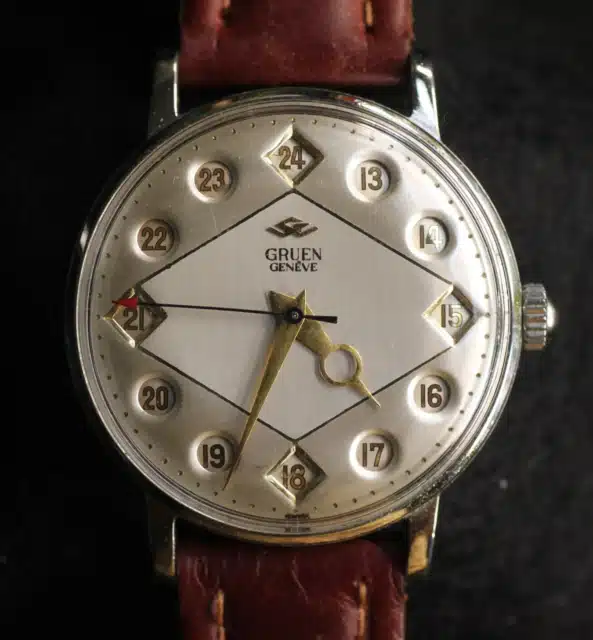
What a treat it would be if an independent could bring back these simply elegant timepieces, as interpreted through a modern lens? Maybe someone with historic ties to the original founders? You know, like modern-day Moser & Cie or Fears? That would be lovely.
Lemania
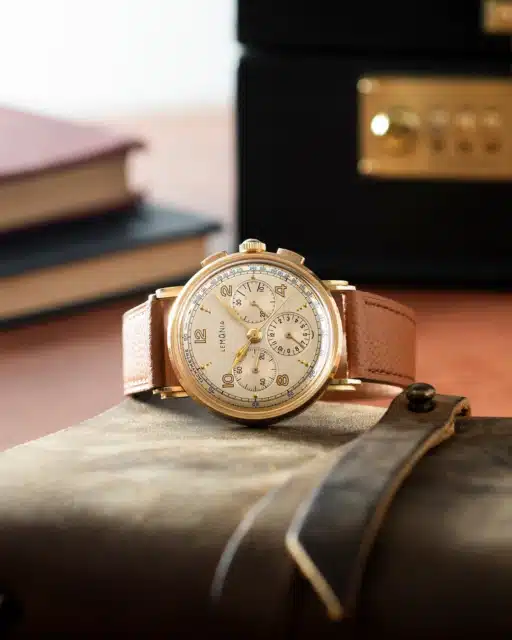
Before the House of Brands announced it was reviving Gallet, there was a lot of speculation that it might bring back Lemania. While it turned out to be wishful thinking, there are many compelling reasons to revive the brand.
Originally known simply as “A. Lugrin,” Lemania was founded by ex-Jaeger-LeCoultre watchmaker Alfred Lugrin in 1884. By the early 20th century, the company was famous for its chronograph stopwatches and chiming repeaters.
While the company’s calibres were exceptional, its business acumen was not as strong – especially during the Great Depression. In 1930, Lugrin’s son-in-law, Marius Meyland, took over the management and the maison was renamed Lemania Watch Company.
In 1932, Omega, Tissot, and Lemania joined forces and became the Société Suisse pour l’Industrie Horlogére (SSIH). For almost four decades, Lemania supplied its sister companies with all its chronographs, most notably the ébauches for the legendary Calibre 321 – the movement used in the original Omega Speedmaster between 1957 and 1968.
In 1981, the brand changed its name again, becoming Nouvelle Lémania. Then, starting in the mid-1980s, before Patek Philippe began producing its own in-house chronograph movement, it employed the Lemania-based movement for the following references: 3970, 3971, 3990, 5004, 5020, 5021, 5070, 5071, 5970, 5971. While all that was happening, Lemania was bought by Breguet in 1992, which, in turn, was acquired by the Swatch Group.
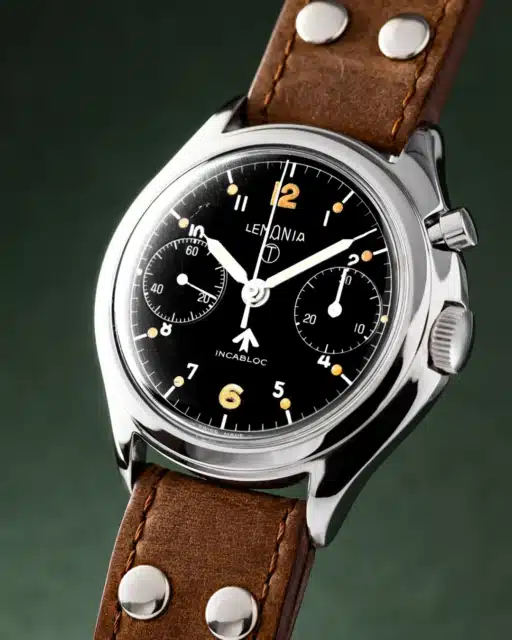
So, you might already have an unsigned Lemania and not even know it. But branded examples are just as desirable because they allow collectors to acquire a historic chronograph at a more accessible price point.
Lemania was so ahead of its time that we’d like to see it reborn, perhaps under the wing of a larger luxury house. There is a precedent for this, with Montblanc buying the historic Minerva manufacture and reincorporating its historic signatures into its Villeret Collection. Make it so!
Le Phare Jean d’Eve
Le Phare is another almost forgotten watchmaker that is ripe for a resurgence. It started out in 1888 as Barbezat-Baillot, a manufacture that specialized in high-end complications such as repeaters that used a centrifugal force mechanism to silence the noisy mechanics, allowing the alarm to ring clearly. It also introduced a pushbutton to activate the alarm, which allowed the mechanism to fit in a smaller case.
In 1905, Barbezat-Baillot changed its name to Le Phare (the lighthouse) and continued to specialize in complicated pocket and wristwatches. Then, in the 1970s, the brand decided to take a walk on the wild side, focusing on masculine wristwatches with modern elements such as semi-precious dials and asymmetrical and retrograde displays. All things that are covetable amongst collectors today.
And Le Phare leaned heavily into this aesthetic, spinning off an even higher-end sister brand called Jean d’Eve in the 1980s. The most famous models were the Spinnaker (which featured a rope design around the bezel), the retrograde Sectora, and the Sumara, the world’s first automatic quartz watch.
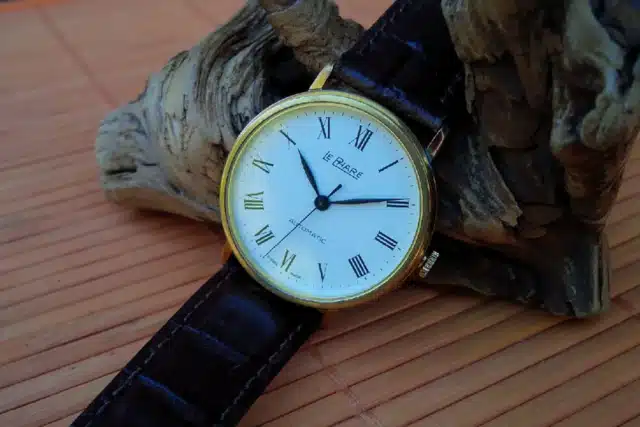
I can’t explain why Le Phare Jean d’Eve dropped so dramatically off the radar (the website hasn’t been updated since 2016), but for savvy vintage collectors, the brand’s 1970s to 1980s editions provide the allure of ‘80s excess at an attainable price point. Moreover, given Le Phare’s rich history, these pieces feel like more than just alternatives to Piaget or Gérald Genta. As vintage pieces, these late 20th-century Le Phare models generally sell for around $2,000 for a time-only watch to $5,000 for a tri-compax, while the Jean d’Eve retrogrades average about $2,000.
I don’t know which brand would be a good steward for a revival of these brands. Maybe an enthusiast with deep pockets could bring them back.
Bueche Girod
Bueche Girod was a small Swiss manufacture formed by Vital Bueche in 1947 and named after him and his wife (Edwige Girod). Throughout the 1950s, ‘60s, and ‘70s, the mechanisms created by Bueche Girod were so admired that other maisons such as Cartier, Bulova, and Universal Genève sourced manual winding movements from the company.
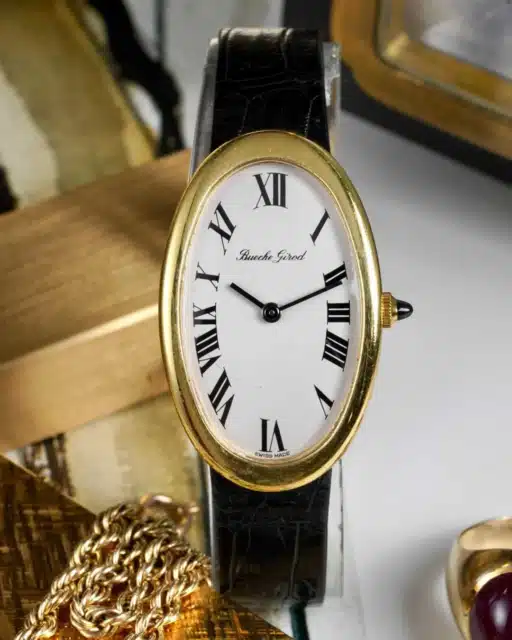
The brand was also revered for its bold, haute joaillerie designs, and it was a favorite of Las Vegas High Rollers. Particularly the Rat Pack. Jerry Lewis owned a Bueche Girod. Frank Sinatra wore one while performing at the Sands. And Robert De Niro wore one in Martin Scorsese’s crime drama Casino.
Bueche Girod was most famous for hidden gold coin timepieces and dazzling diamond-set cases and gemstone dials. The super-luxe business just wasn’t sustainable during the recession of the early 1980s, and the brand ceased operations.
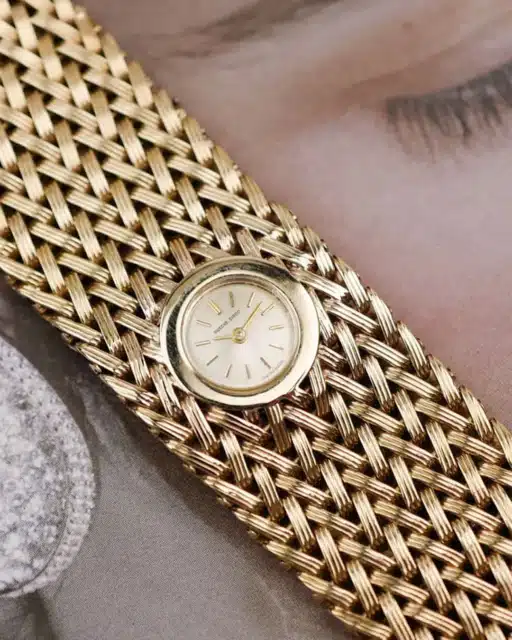
Because of the limited output of this short timeline, Bueche Girod pieces are quite rare, but who wouldn’t want to see the brand’s contributions acknowledged in some way? If not a reissue, how about a museum exhibition or a themed auction of some sort? Come on, curators, do your thing!
(Front image © Analog:Shift)
Advertisement